

By Frank Espinoza
Rapid City Journal, S.D.
PENNINGTON COUNTY, S.D. — Pennington County Sheriff Brian Mueller updated the Board of Commissioners on a $615,000 grant the state’s Opioid Advisory Committee awarded the county. The committee is part of the South Dakota Department of Social Services.
At the Tuesday, April 21, commission meeting, Mueller said the $615,000 will soon go into the county’s restricted opioid budget in increments of around $205,000.
The board didn’t take action at the meeting, as the update was a presentation only.
“I sit on a local opioid group that’s run through the combination of city, county and several other partners evaluating our response to substance abuse strategies in our community and as part of that process, we went through a process to apply for state opioid funding. The state department of social services is sitting on several million dollars’ worth of opioid funding,” Mueller said to the commission. “We’re trying to get that released into our communities to have the biggest impact.”
The local opioid committee is made up of Rapid City Council members Stephen Tamang, Callie Meyer and Lance Lehmann , Mueller, Rapid City Police Chief Don Hedrick, Rapid City Fire Chief Jason Culberson, Chief of Staff of the City of Rapid City Leah Braun, Pennington County Health and Human Services Director Barry Tice and Pennington County Board of Commissioners Chair Ron Weifenbach.
Per previous reporting by the Journal, Tamang, Rapid City Mayor Jason Salamun and Mueller sent a letter on Sept. 11, 2025, to South Dakota Attorney General Marty Jackley requesting $25 million from the state’s opioid funds.
The South Dakota Department of Social Services opioid settlement fund dashboard shows the state has received nearly $33 million since disbursement. Of that, $9.6 million has gone to local governments. Rapid City and Pennington County have received a combined $1.5 million and reported about $300,000 in spending. The majority of the funds, 70%, are under the state’s purview.
The Pennington County Sheriff’s Office oversees the Care Campus, the county facility that provides addiction treatment services and safe beds at 321 Kansas City St. The facility is accredited by the South Dakota Division of Behavioral Health through the Department of Social Services.
“Mayor ( Jason Salamun ) and I have been very actively involved behind the scenes to try to work to get block grant funding for the Rapid City area and in the Sioux Falls area that could improve services, create better coordination with the services that we do have and also cut some of the taxpayer funding that goes into these types of services,” Mueller said.
Mueller told the Journal specifics on how the grant funding will be spent are still up for discussion, but he is hoping to enhance services at the Care Campus as well as Rapid City.
Mueller said he would like to have government agencies in correspondence to more efficiently tackle the issue of addiction treatment.
“It will improve public safety and that’s my main goal. It will make our community safer, and it will reduce recidivism and it will give people who live here a higher quality of life,” Mueller said.
He’s hopeful further funding from the state will trickle down to both Rapid City and Sioux Falls.
Local Opioid Committee
The local opioid committee is working to distribute both state and municipal opioid settlement funds to organizations in Rapid City working to expand community-based support programs, address the needs of criminal-justice involved individuals, and strengthen workforce development for addiction professionals. It’s fielding requests from community organizations working in drug treatment, prevention or research.
On April 20, the Rapid City Council approved the authorization for the mayor on behalf of the city to join an opioid settlement lawsuit with a total settlement of $97.62 million.
The lawsuit contains six defendants consisting of associated pharmacies, JM Smith Corporation, Louisiana Wholesale Drug Company, Morris and Dixon Company, North Carolina Mutual Wholesale and more.
Assistant City Attorney Justin Williams told the Journal he couldn’t estimate how much the city could get, but said it might be a small amount.
Tamang, who sits as chair of the committee, clarified to the Journal that this settlement funding would not come from the state.
“There’s a whole bunch of smaller settlement suits that are going on. This isn’t the first one. The city has joined many of them,” Tamang said.
Rapid City Finance Director Danie Ainslie said the city currently has $682,266.25 in settlement funds. With recent distributions of funds going to Narcan ($53,460), Infinity Vial Sampler ($84,236), Care Campus ($250,000), Fire and EMS ($150,000), Addiction Recovery Center of the Black Hills ($50,000), and to Monument Health Foundation ($50,000).
Looking to navigate the complexities of grants funding? Lexipol is your go-to resource for state-specific, fully developed grants services that can help fund your needs. Find out more about our grants services here.
The Cohutta police force vanished overnight following a heated conflict over unauthorized access to town systems and concerns over municipal payroll
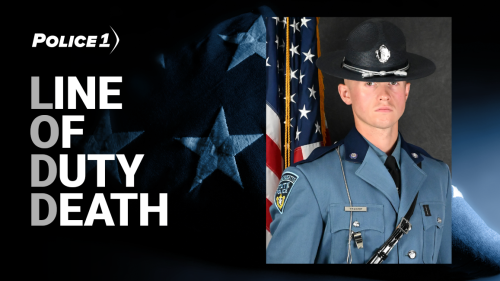
Trooper Kevin Trainor was commuting home from his shift shortly before 2 a.m. when his cruiser was struck
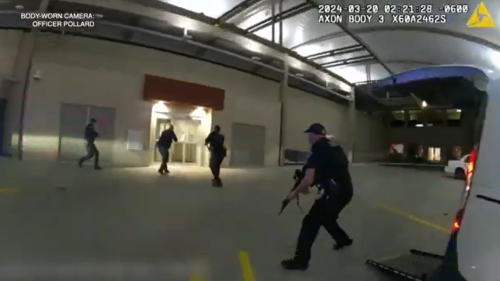
The lawsuit alleges Boise police failed to verify identities or gather critical information before opening fire during the chaotic response to inmate Skylar Meade’s hospital escape

Several state sheriffs sued, securing a block on the law from a lower court; they alleged the law gave an unelected board illegal power to remove elected officials
© 2026 Rapid City Journal, S.D.. Visit www.rapidcityjournal.com.
Distributed by Tribune Content Agency, LLC.
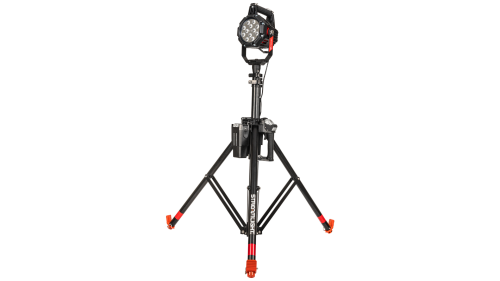
New waterproof lighting system introduced at FDIC International