

By Sofia Saric
Miami Herald
MIAMI — Police canine handlers bet their lives on their dogs, yet the majority of American law-enforcement agencies don’t financially support their K9s once they retire, according to the Retired Police Canine Foundation.
Canine medical needs are pricey, foundation spokesman Lt. John Pappas said. An annual check-up can cost more than $1,000 in some cities. Chemotherapy or emergency procedures might have a price tag of more than $10,000. The cost typically falls on the law-enforcement agency while the K9 is on active duty, but in retirement, the handler often takes on the financial burden.
In a bid to fully cover or offset these costs, Florida offers handlers of eligible canines up to $5,000 per canine per year for veterinary expenses, according to Pappas. The Retired Police Canine Foundation was selected as the recipient of these funds and is in charge of dispersing them to handlers across the state.
Florida “is way ahead of everybody else in this country” in this regard, Pappas said. He was a canine commanding officer with the New York City Police Department.
A dog that served at least five years is eligible, according to the Florida Department of Law Enforcement. A dog that served at least three years, was injured in the line of duty and retired from the agency due to that injury also meets the requirements. Handlers can use the funds for various expenses, including vaccinations and cremation.
While $5,000 definitely offers handlers some relief, it doesn’t always solve the financial strain, according to Pappas.
Police canine handlers can look at their dogs and know what they are thinking, “almost like a cartoon,” he said. They have “one of the most intense bonds between animal and human that exists.” So, when it costs $20,000 or even $50,000 to help their canines in retirement, the handlers will often put themselves in debt to save their lives.
“We’re very, very bonded with these animals,” Pappas said.
It’s not that police agencies don’t want to pay for their retired K9s’ medical costs, he said, adding most simply can’t afford it. Each agency may do things a little differently when it comes to their dogs based upon unique policies and funding.
Broward County
While assuming the financial responsibility for a retired canine’s healthcare can be demanding, “handlers overwhelmingly choose to do so out of respect for the sacrifices, service and protection the canine provided throughout their career,” Claudinne Caro, a Broward Sheriff’s Office spokeswoman, said.
The Broward Sheriff’s Advisory Council and the Sheriff’s Foundation of Broward County may provide some financial assistance for BSO’s retired canines in addition to the $5,000 offered by the state, according to Caro.
“Retirement allows these dogs to enjoy a well-earned life with the person they trust most,” Caro said.
The canine policies are somewhat similar at the Hollywood Police Department , according to spokeswoman Deanna Bettineschi.
The average working lifespan of a police canine is approximately seven to eight years, Bettineschi said. Prior to retirement, each canine undergoes a comprehensive veterinary examination, and any identified medical issues are addressed to the greatest extent possible.
The hard work performed by Hollywood police canines “throughout their career is invaluable” and they become part of the department’s family just like any other officer or civilian staff member, Bettineschi said.
Beyond state funding, Florida also partnered with K9s United, a nonprofit that provides financial assistance for both active-duty and retired police canines, she said.
The Fort Lauderdale Police Department operates differently, according to Sgt. Patrick O’Brien, a police spokesman.
“All the K9’s medical expenses are paid for by the city, this includes when the dog is retired,” O’Brien said.

The Staples Police Department had seven officers, who served alongside Guadalupe County Sheriff’s deputies to patrol the city
Drone video of the incident shows an crowd throwing bottles at officers trying to render aid to the wounded suspect
After LAPD officers hit the man with a less lethal projectile, body-worn camera and surveillance footage showed him move toward the officers while holding the utensil in his hand
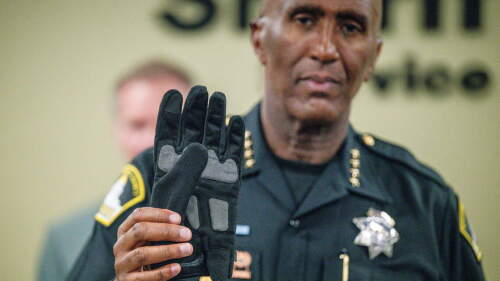
Sacramento County Sheriff Jim Cooper said his agency already spent $35,000 to purchase 10 shock gloves, along with 10 shock bands to be placed on an arm or a wrist
©2026 Miami Herald. Visit miamiherald.com. Distributed by Tribune Content Agency, LLC.

The partnership brings Tranquility AI’s platform, TimePilot, to three USC Upstate initiatives: the Upstate Crime Analysis Center (UCAC), the USC Upstate Criminal Justice Education Program, and the newly established USC Upstate Cold Case Team