

By Chevall Pryce
Baltimore Sun
BALTIMORE — Baltimore is creating a new $16.8 million agency to send clinicians, social workers, and other responders to thousands of 911 calls now handled by police, an effort officials say will give the city a 24/7 alternative for nonviolent emergencies.
The Department of Neighborhood Safety, which the administration plans to introduce through legislation later today, comes more than a year after The Baltimore Sun found that the city’s existing system for diverting behavioral health calls from 911 to mental health professionals had sharply deteriorated.
Although diversions increased in the months that followed, the city’s mobile crisis teams were still taking an average of more than 83 minutes to reach people in need, according to data reported in February.
According to the Mayor’s Office, the city’s emergency services receive 22,000 calls a year for non-violent situations like trespassing, welfare checks, public nuisance and public intoxication. More than a third of those calls involve homeless people.
The new department aims to respond within an hour — but it will not be fully operational for about a year, and officials were unable to say when asked how many responders would be available on each shift or how many of those 22,000 calls could ultimately be handled by the new department.
“We have the opportunity to create a unified and sustainable operation by consolidating related and complimentary safety functions under one organizational roof,” Letitia Dzirasa , deputy mayor for health and human services, said. “All in an effort to drive better outcomes, strengthen coordination, bring together public health and public safety and ensure long-term operational sustainability.”
A focus on non-violent solutions
Under the proposed system, Baltimore’s 911 dispatchers would determine whether a call should be handled by a clinician, a co-response team involving a police officer and mental health clinician, a 988 mobile crisis team or a team of trained non-law enforcement responders such as social workers and peer recovery specialists.
The system is intended to give police and emergency medical responders another option for calls that do not require their involvement, while connecting people with medical care, behavioral health services, substance-use treatment and other resources.
“Under this new agency and structure, we will also be expanding the operational model to support an emergency alternative response to community needs like welfare checks and public nuisance complaints,” Dzirasa said.
Administration officials have not detailed all of the circumstances that would make a call ineligible for a non-law-enforcement response, including how dispatchers would determine when a call considered nonviolent could pose a safety risk to responders.
The current proposal funds the agency with $15 million from the city’s Opioid Restitution Fund and $1.8 million in state funding. The Mayor’s Office of Neighborhood Safety and Engagement , or MONSE, will be folded into the new department, with its existing violence-prevention work continuing under the new structure.
“MONSE retains its role in addressing violence as a public health issue,” Dzirasa said. “Part of our ability to add this additional service line is in part because of MONSE’s proven success and community credibility.”
In response to The Sun’s question about the funding, Dzirasa said the restitution fund has an earmark for 24/7 response, which is why it was used. The $1 million in state funding comes from the State Aid for Police Protection Program, which helps pay for alternative emergency response systems.
According to administration officials, $12.4 million would be spent on a new Computer-Aided Dispatch system for 911 calls. This would redirect non-violent 911 calls to the new agency. The remaining $4.42 million in the project would go for training of the agency’s workers and implementation of its programs.
Meeting a consent degree goal
Administration officials also said this new agency would meet one of the Baltimore Police Department’s consent decree goals — establishing a 24/7 alternative response to emergencies.
The federal consent decree requires BPD to establish a preference for the least police-involved response possible when consistent with public safety and to divert people experiencing behavioral health crises to the behavioral health system when appropriate.
The Sun asked if this change would have an impact on the police budget, as overtime was a major reason given as to why the department went over projected spending.
Dzirasa said it is too early to tell if the DNS will help the Baltimore Police Department reduce overtime for officers, but she said it would help save those resources for other crimes and calls.
The Sun also reached out to Baltimore Police for comment and did not hear back by presstime.
Next steps
The DNS is not an agency yet, and the City Council and Mayor’s Office must follow the bill process to make it official.
Alana Calhoun , with Council President Zeke Cohen’s office, said the president will introduce an ordinance for the DNS, co-sponsored by Mayor Brandon Scott’s Administration, during Monday’s City Council meeting.
The ordinance will then be discussed during a hearing on Oct. 14 . After expected approval by the City Council on Oct. 26 , the bill will be signed by Scott on Oct. 27 if all goes according to plan.
The agency is expected to be fully functional after a year of staffing and development, Dzirasa said.
If the ordinance is passed, the DNS will begin hiring staff even with MONSE’s staff already integrated. The administration did not divulge how much staff will be hired in total.
“There will be a new executive director and a search for that role, there will be an alternative response deputy director, there will be the community response team, there will be community response liaisons, there will be data managers,” Dzirasa said. “There will be similar staff to what we see across our agencies to support the administrative functions of establishing a new agency.”
Along with training the new staff for the DNS, Baltimore Police officers will be educated on how the DNS will be integrated into their work. Continued education for both DNS and police officers is planned as well.
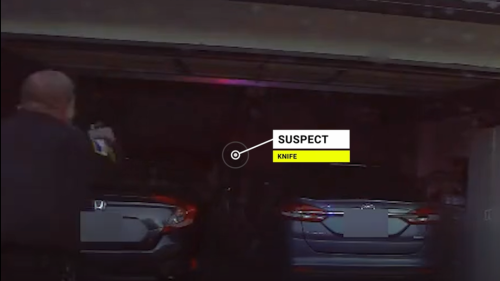
The San Antonio Police officer responded to a domestic disturbance report to find a man wielding two knives in the yard
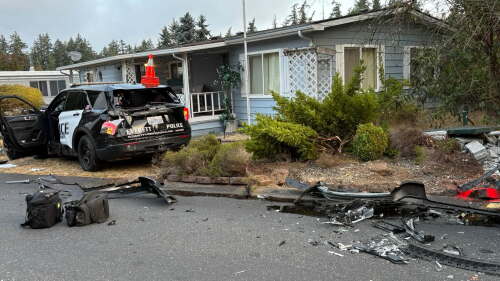
For crimes in progress, the NYPD’s end-to-end response times averaged 15 minutes and 21 seconds

Kenyun Robert Smith was sentenced to a minimum of 47 years in prison for the shooting of Kalamazoo Township Police Officer Evan Finch on March 27, 2025
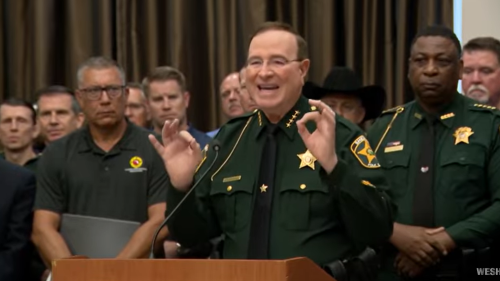
Mayor Jacob Frey acknowledged the value of the unit as a “force multiplier” during events that required crowd control, but stated that funding concerns motivated the decision
Have a news tip? Contact Chevall Pryce at [email protected].
©2026 Baltimore Sun. Visit baltimoresun.com. Distributed by Tribune Content Agency, LLC.

A visionary modern sporting rifle, the Titan embodies several true firsts for Beretta and introduces unexplored solutions within the firearms industry, both from an aesthetic and a technical perspective