

Are you thinking about planning a visit to Okinawa, Japan and ? We don’t blame you, the country’s southernmost prefecture has some of the country’s best beaches and sunny tropical weather you won’t find in the rest of the country. We found the islands of Okinawa more similar to French Polynesia than the rest of Japan!
The tricky part about putting together an itinerary of the best things to do in Okinawa is deciding which of the prefecture’s 150 islands you want to visit. We narrowed it down to the Yaeyama Islands, Okinawa Island, and the Miyako Islands. We’ve got adventure, time lazing on the beach, and heaps of culture in store for you on this trip.
What You’ll Get Out Of This Article
This epic Okinawa travel guide has everything you need to prepare you for an unforgettable trip, including:
- Explore our favorite islands in Okinawa Prefecture, with tips on where to start among 150+ islands.
- Epic outdoor adventures, like kayaking through Iriomote’s mangrove forests.
- Guides to the best scuba diving spots, including the famous Yabiji coral reefs.
- Curated tours to must-see Okinawa attractions, including the Blue Cave accessible only with a guide.
- Top hotel recommendations to save time and focus on food and fun.
- Travel tips and pitfalls to avoid so you don’t make the same mistakes.
- A detailed packing guide you can use as a checklist.
- Answers to all your burning questions about Japan’s southernmost prefecture.
In This Article
Ultimate Guide To Okinawa
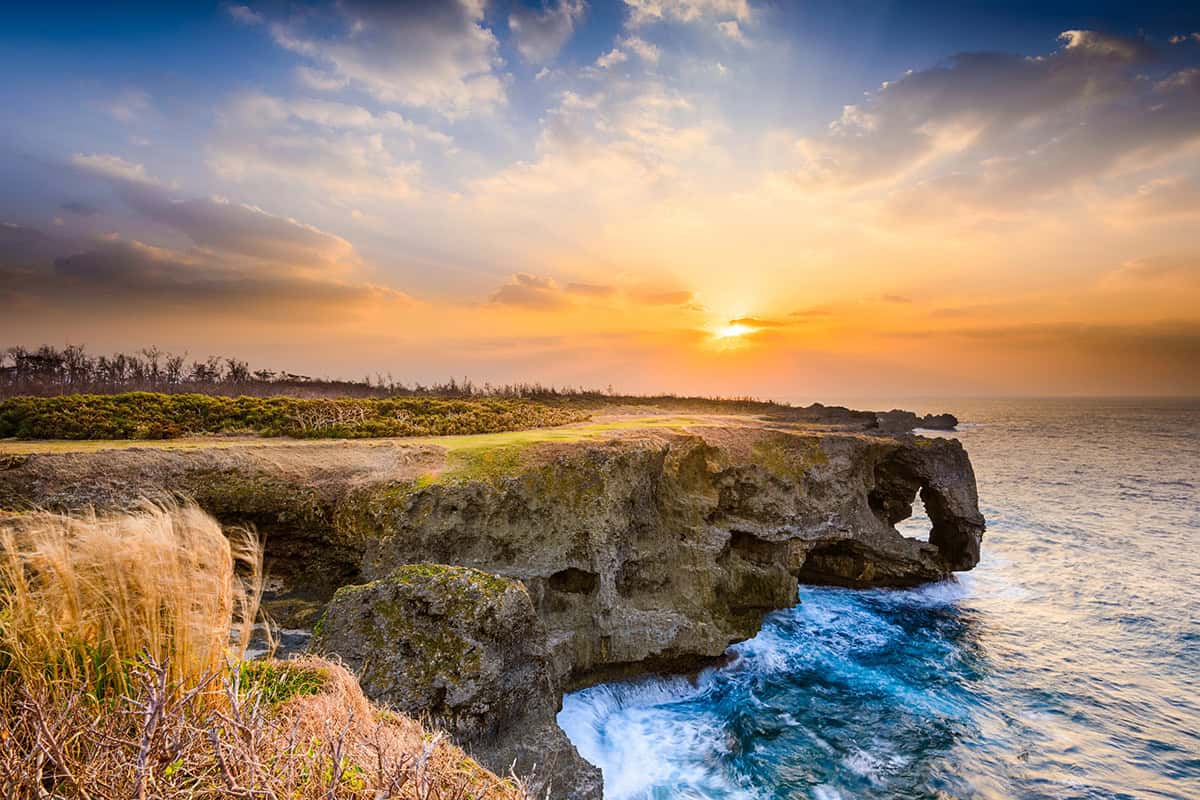
This unique region of Japan has loads of unique experiences. We can’t wait for you to discover all of the best things to do in Okinawa.
TOP TIPS FOR TRAVELING TO JAPAN
- Where to stay: Riad Lamp is a glamorous adults-only hotel right by the beach on Okinawa Island with all the oceanside views you could want. We use Booking.com for all of our stays and use the Genius discount to get great deals on our hotel bookings. Alternatively, you can always see if hotel corporate codes might work for you.
- Must pack item: Bring along your beach essentials, not forgetting sunscreen, sandals, and a quick-dry towel.
- Recommended tour: The only way you can snorkel to the Okinawa Blue Cave is with a tour, so this is a must-book. The water inside the cave is lit up azure blue by the light streaming in, and the number of marine species was mesmerizing.
- Car rentals: You don’t really need a car whilst you’re in Okinawa, as you can mostly get around using public transport such as local ferries, buses, and even by cycling. But it can make your trip easier and give you a more flexible schedule. If you do decide to rent a car, make sure you know about ways to save money with car rental coupon codes, and always start your search with Discover Cars and Booking’s car rental platform so you know what the best deals are.
- Flights: If you are flying in from elsewhere, use the Skyscanner “Everywhere” feature to find the best deals from your local airport. Check how much it would be for you to get to Naha Airport.
- Insurance: Not always required but always recommended! Make sure you’re covered with the best travel insurance. Our go to is always HeyMondo for good all-around coverage at reasonable prices.
- Hottest deals: Never be without our frequently updated travel deals page.
Why Okinawa Is Worth Visiting

Okinawa is Japan’s southernmost prefecture. Unlike the country’s other prefectures that are either on the mainland or a big island themselves, Okinawa is made up of more than 150 small islands.
Clustered together in the East China Sea between Taiwan and mainland Japan, they have a unique climate and atmosphere that is pretty distinct from the rest of the country. Visitors come to Okinawa for the tropical beaches and breathtaking coral reefs.
As mentioned, a lot of it reminded of our time in the Pacific including our epic 2 weeks in Tahiti.
The biggest island is Okinawa Island, which has a lot of World War II Memorial Sites. If it’s white sand and pristine blue sea that gets you going, then head to Miyako Island. Adventurous souls will fall head over heels for Iriomote Island, which is part of the Yaeyama Islands.
If we were to summarize, here are 10 reasons that help answer “is Okinawa worth visiting?”
- Incredible Beaches – Crystal-clear turquoise water, soft white sand, and some of Japan’s best snorkeling and diving spots.
- World-Class Diving – Home to vibrant coral reefs, sea turtles, manta rays, and famous sites like the Blue Cave and Kerama Islands.
- Unique Ryukyu Culture – Distinct music, dance, crafts, and traditions you won’t find anywhere else in Japan.
- Mouthwatering Okinawan Cuisine – From taco rice to Okinawa soba, rafute pork, and super-fresh local seafood.
- Warm, Tropical Climate – Beach weather much of the year, with warmer winters than mainland Japan.
- Fascinating History – Explore Shuri Castle, Ryukyu heritage sites, and WWII memorials like the Peace Park.
- Laid-Back Island Vibe – Slower pace, friendly locals, and a relaxed atmosphere perfect for unwinding.
- Stunning Nature & Outdoors – Waterfalls, jungle hikes, cliffside viewpoints, and lush islands across the prefecture.
- Family-Friendly Experiences – Churaumi Aquarium, eco-parks, glass-bottom boats, and easy beach days.
- Gateway to Remote Islands – Miyako, Ishigaki, and the Yaeyama Islands offer untouched beaches and world-class water activities.
Notable Hotels In Okinawa
Figuring out where to stay can feel like another task on the endless to-do list that comes with planning a trip. To give you a head start, here are our favorite hotels in Okinawa.
- Almont Hotel – This modern and elegant hotel is strategically positioned in the centre of Naha city. It’s a great base as you explore Okinawa Island. Another plus is that breakfast is included, and there’s an indoor pool!
- Riad Lamp – For anyone in need of a little luxury, this exquisite adults-only hotel is the one for you. It is a little on the pricey side, but if you can afford to splash out, it’s so worth it. The rooms come with sea views, and there’s a spa on-site where you can get a massage. Stopping over in Nanjo will be a must if you decide to go to Kudaka Island, so why not treat yourself?
- Hotel California – Hotels on Miyako Island can be pretty expensive, so we were super pleased when we found this cozy and affordable hotel on the outskirts of Hirara. It’s not too far from Miyako Airport, so if you decide to fly from Okinawa Island to Miyako Island, it is easy to get to the hotel.
- Mayagusuku Resort – This homey and cute resort on Iriomote Island is a 4-minute walk away from Tsuki-ga-hama Beach and near the Kanpira Waterfall, two bonus attractions that didn’t make it onto our itinerary. The host is really friendly, and we were able to rent a car and comfortably explore the island from the resort.
Top Things To See in Okinawa

Okinawa is distinctly tropical and has a real beach vibe to it. There are so many different islands that you could spend a lifetime traveling the prefecture. We’ve handpicked the best of them to help you get started.
We suggest that if you’re there on your first trip, you head to the main island, Okinawa. You’ll be able to go island hopping from there, and there are a lot of things to do on the island itself – like lazing on white sand beaches and visiting WWII memorial sites.
Hoping for a beach-themed holiday and scuba diving trips? Then visit the Miyako islands. And if you are someone who travels for adventure, Iriomote Island will be more your style. Hike through the island’s thick jungle at night, and kayak through mangroves during the day.
If a tropical getaway is calling your name, you’re in the right place – here are the can’t miss things to do in Okinawa.
What To See On Okinawa Island
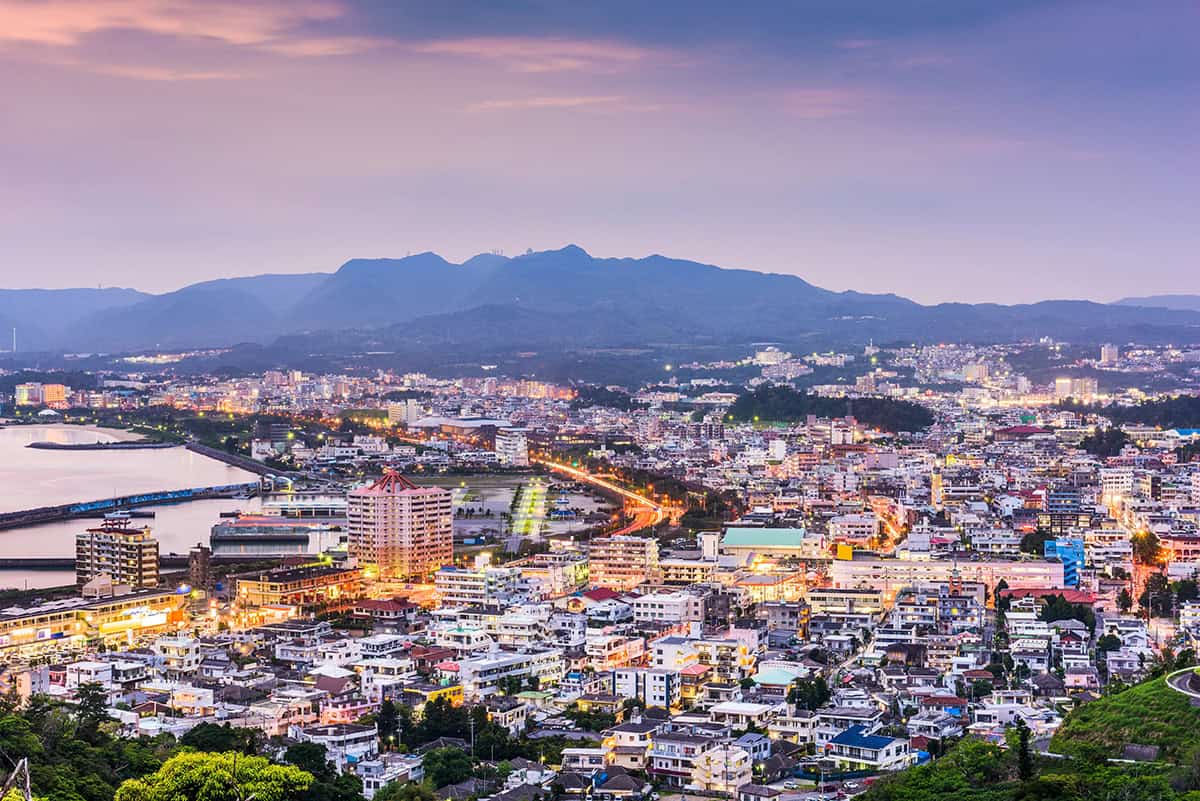
Okinawa Island is the largest island in the cluster of islands that make up Okinawa. It’s a great starting point when you’re exploring Okinawa. You can reach lots of the region’s other islands on half-day or day trips from Okinawa, so if you’re short on time, you could use it as your base and travel around from here.
There are loads of epic beaches, great snorkeling spots, and historical sites on Okinawa. You’re in for a real adventure!
Soak in the sun on Mibaru Beach
The beaches on Okinawa look like they’re straight out of the tropics, and it is hard to believe that they are part of the Japan you imagine. This epic beach is great for families as the water is shallow and the waves are always calm.
Mibaru Beach stretches across 2 kilometers of gold sand lined by lush green forest. We loved the giant boulders poking out of the sea – they added a dramatic element to our travel pics!
Whilst you’re there, make sure you ride the glass-bottomed boat that sails out to the coral reefs about a kilometer away from the beach. Some insider knowledge we didn’t get until we were already there is that you can get a discount on their website. Show them this link on your phone and save on your boat adventure.
Go snorkelling to the Blue Cave
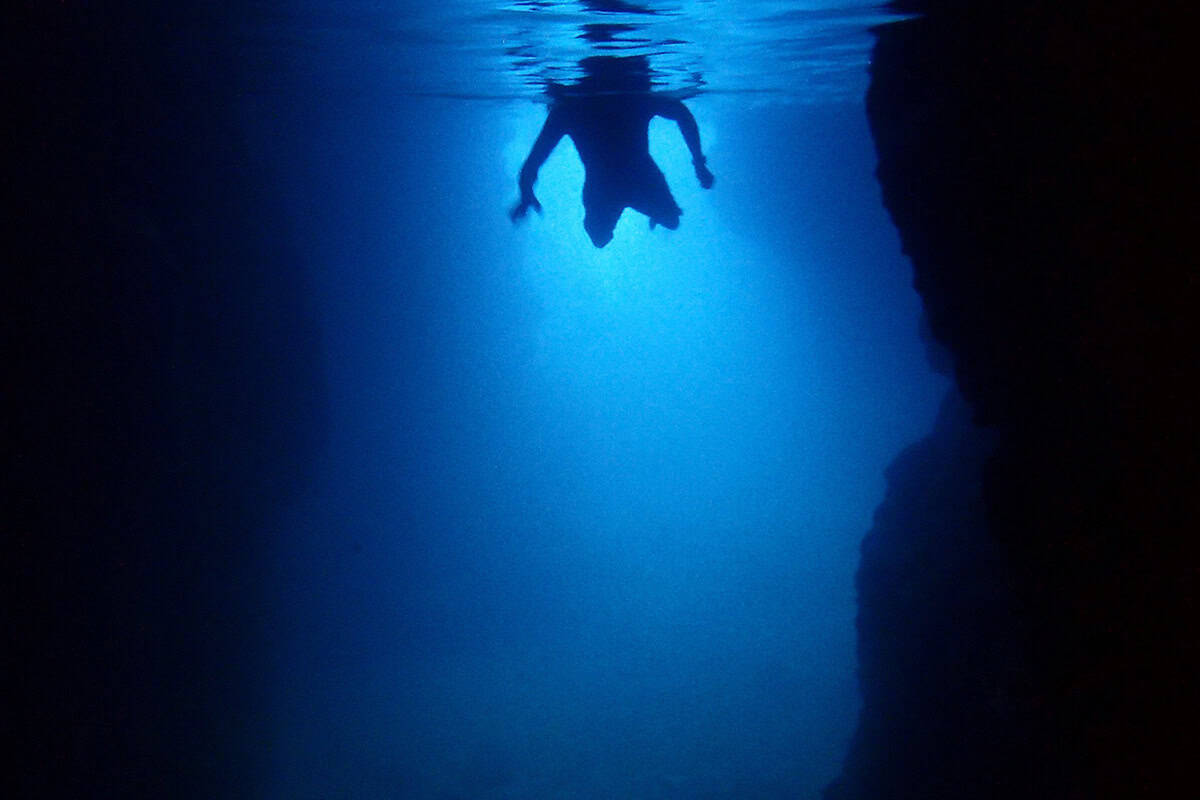
Yes, Okinawa has its very own blue cave! The light beams in through the top of the cave, illuminating the water a vibrant blue and lighting up all the tropical fish and diverse sea life below. If you’re in Okinawa, snorkeling in the Blue Cave should be high on your bucket list.
You can only visit the cave on a guided tour. They’ll suit you up with wetsuits and snorkeling gear before taking you out by boat. From there, you’ll hop into the water and swim into the cave with an instructor leading the way.
It is well worth the trip to Ishigaki Island, and being inside the cave was awesome! There are colorful fish everywhere – keep a look out for oriental butterflyfish and Japanese parrotfish. On many of the tours you can also feed the fish. We booked this tour with really friendly instructors.
Book a Ryusuo photoshoot in Naha city
Traditional Japanese costumes are so beautiful, the colors and attention to detail take us by surprise every time. Which is why we were so happy when we found where we could get dressed up in traditional ryusou gowns and have our photos taken in Okinawa’s capital.
We set aside a few hours one afternoon and headed to a photography studio. There were loads of kimonos to choose from, with an impressive number of options. After browsing through the gowns we got dressed up and were handed extra props like sun umbrellas and decorative head pieces.
Everyone back home loved the photos, and they are definitely a must if you’re big on social media. You won’t regret booking a session at this Ryusou studio.
Spend a day at Okinawa World
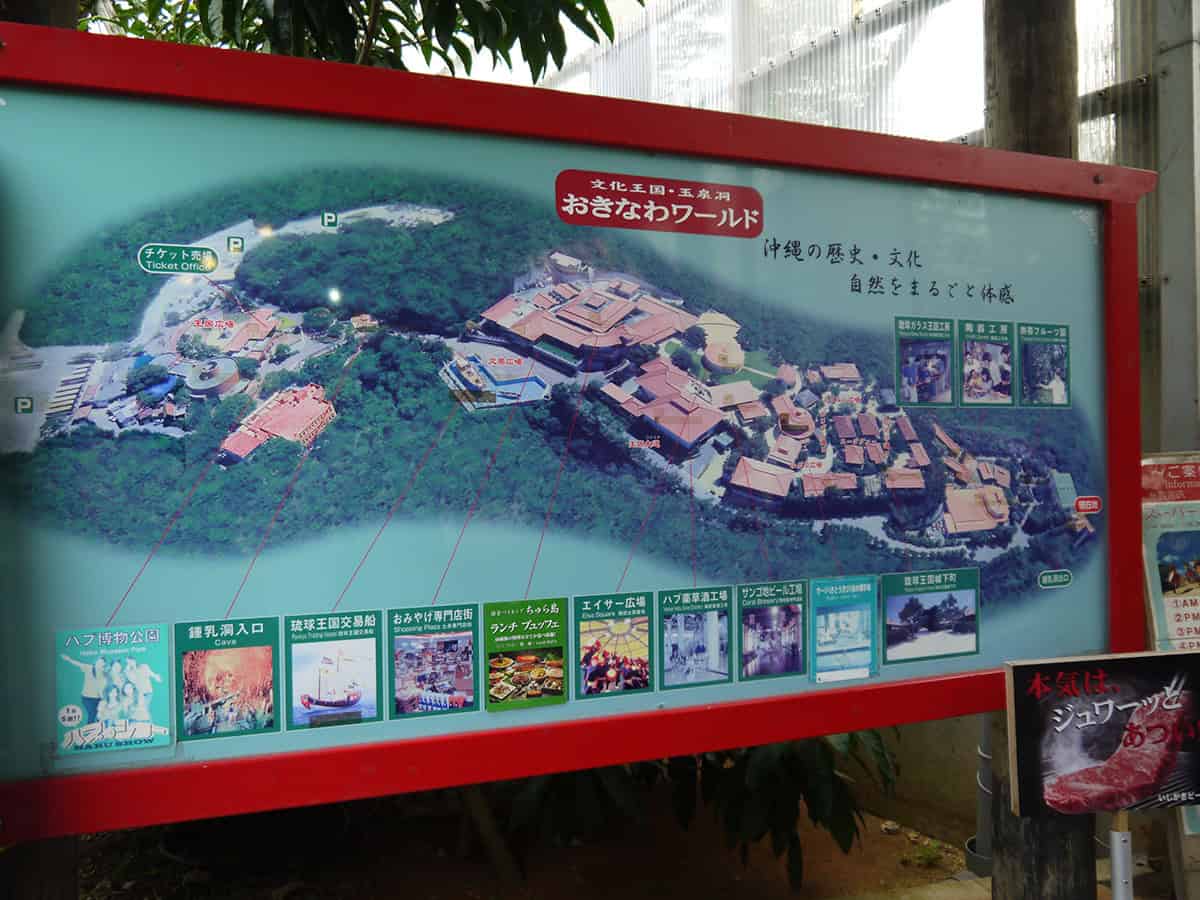
Okinawa World is a unique theme park that packs loads of cool attractions into one. There’s a giant cave, a craft village, and a snake museum (terrifying, but worth a visit). We originally went for the giant limestone Gyokusendo Cave, but didn’t realise there was anything else to do there.
The cave is the longest of the cluster of caves in the south of the island, and the second longest in Japan. It’s 5 kilometers long in total, although only 850 meters of it are open to tourists. Everywhere you look there are enormous stalactites and stalagmites. It was awesome walking along a wooden boardwalk through the heart of the cave.
Afterwards, have a wander around the little Kingdom Village, which is a replica of a traditional Ryukyu village. There are loads of poky workshops where you can learn about traditional crafts. Then check out the snakes at the Habu Park, which is where the snakes are.
Visit Okinawa Churaumi Aquarium

No trip to to the main island is complete without a visit to the world-famous Okinawa Churaumi Aquarium, one of the popular things to do in Okinawa.
Located in Motobu, this aquarium is a must-see for families and marine enthusiasts alike. It’s home to one of the largest Kuroshio Tank exhibits in the world, where you can see majestic whale sharks, manta rays, and countless other tropical fish.
Beyond the giant tank, the aquarium also has interactive exhibits, a touch pool where you can get hands-on with starfish and sea cucumbers, and daily feeding demonstrations that are both educational and awe-inspiring.
Don’t miss the surrounding Ocean Expo Park, which includes beautiful gardens, a traditional Okinawan village, and stunning views of the coastline. This is a perfect for a full day of exploring and worth setting aside the time in your itinerary.
Tip: Arrive early to avoid crowds and give yourself plenty of time to explore both the aquarium and the park.
Uncover the Island’s WWII Sites
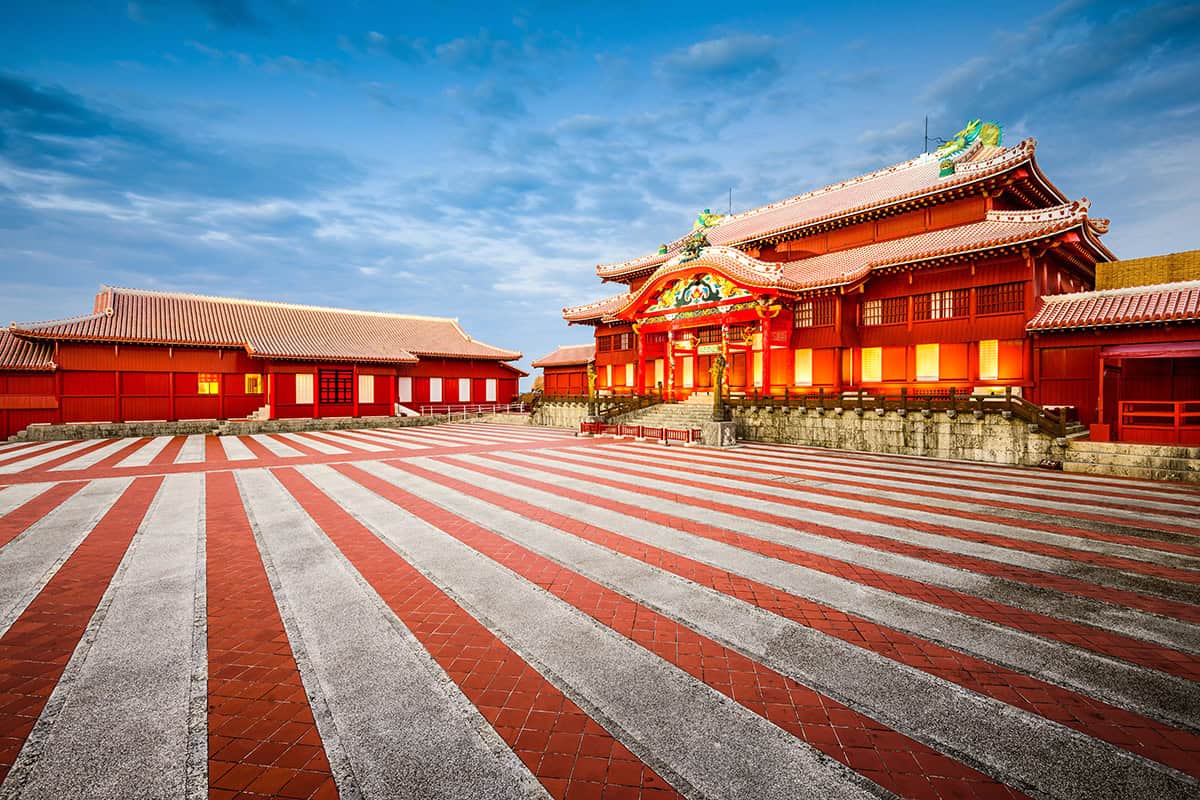
If you’re a history buff you probably already know about the Battle of Okinawa. It took place over the course of three months in 1945 during World War II. Today, many of the old battle sites have been turned into memorial parks and museums.
There are a few different sites worth visiting, but some of the most notable include the UNESCO World Heritage Site Shuri Castle and Tabaru Park. The old castle was used as the Japanese Imperial Army Headquarters during the war, just two miles away from Sugar Loaf Hill (another interesting historical site connected to WWII).
When you first arrive Tabaru Park looks like an ordinary city park, but as you explore, you’ll discover the numerous tunnels around the edge of the park. They were used to as the underground headquarters for the Japanese Naval Base Forces during the war. The tunnels are now closed, but you can still peer in and it’s an awesome bit of history to see.
Hop on a Ferry to Kudaka Island
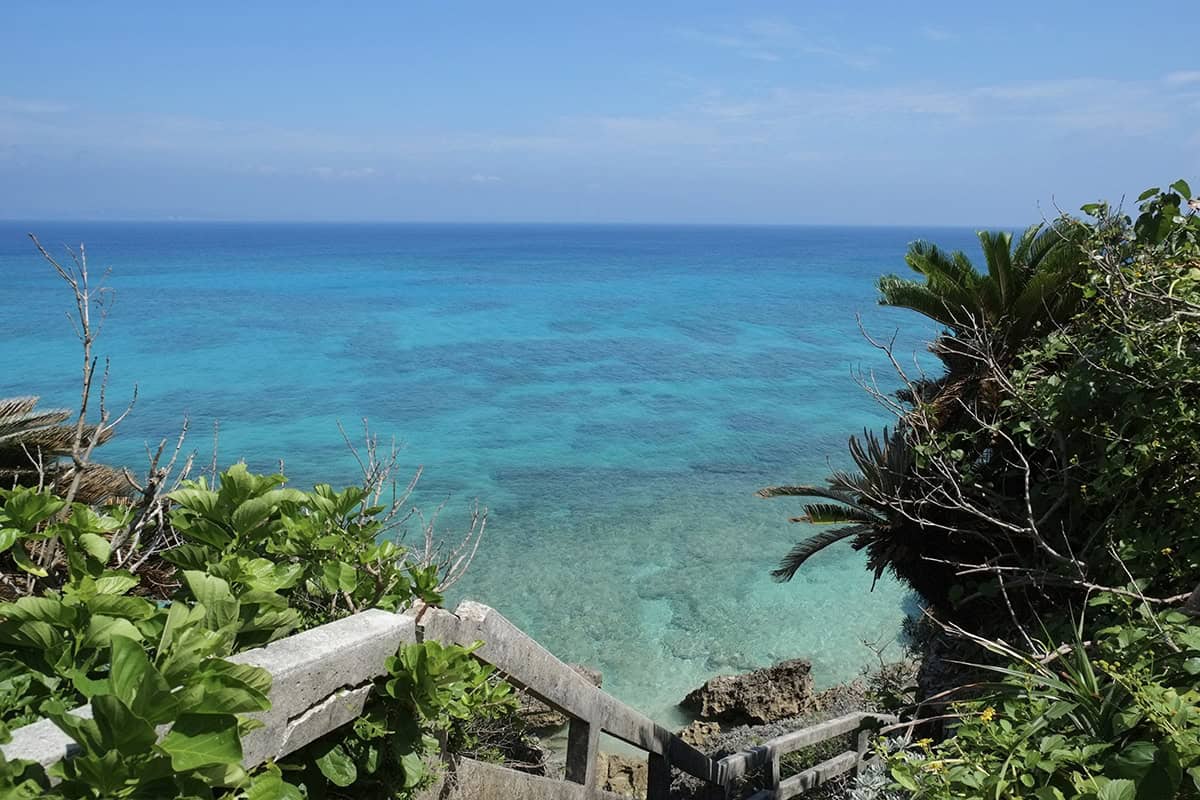
Kudaka Island is one of the most significant of the Okinawa Islands, known for its spiritual energy and numerous sacred sites called utaki. Largely untouched by humans, the island is a haven for wild subtropical nature, making it a perfect spot to explore.
A great way to explore the island is on a bike. You can cycle to sacred sites like the stunning Ishiki Beach (bear in mind you can’t swim here) which is closely linked to the creation mythology of Okinawa. Another important site is Fubo Utaki, where an ancient all-female ritual known as Izaiho was held every 12 years in ancient times.
If you want to dive into the history of the Ryukyuan people, then it’s a must-visit. Stop at a local restaurant whilst you’re there and try the unusual irabu (sea snake) soup, it is a local specialty.
The island is reachable on a short ferry ride from Okinawa Island. Head to Nanjo city’s Azama Port, hop on a ferry or high-speed boat, and you’ll be on this remote island in less than half an hour.
Visit Minna-jima
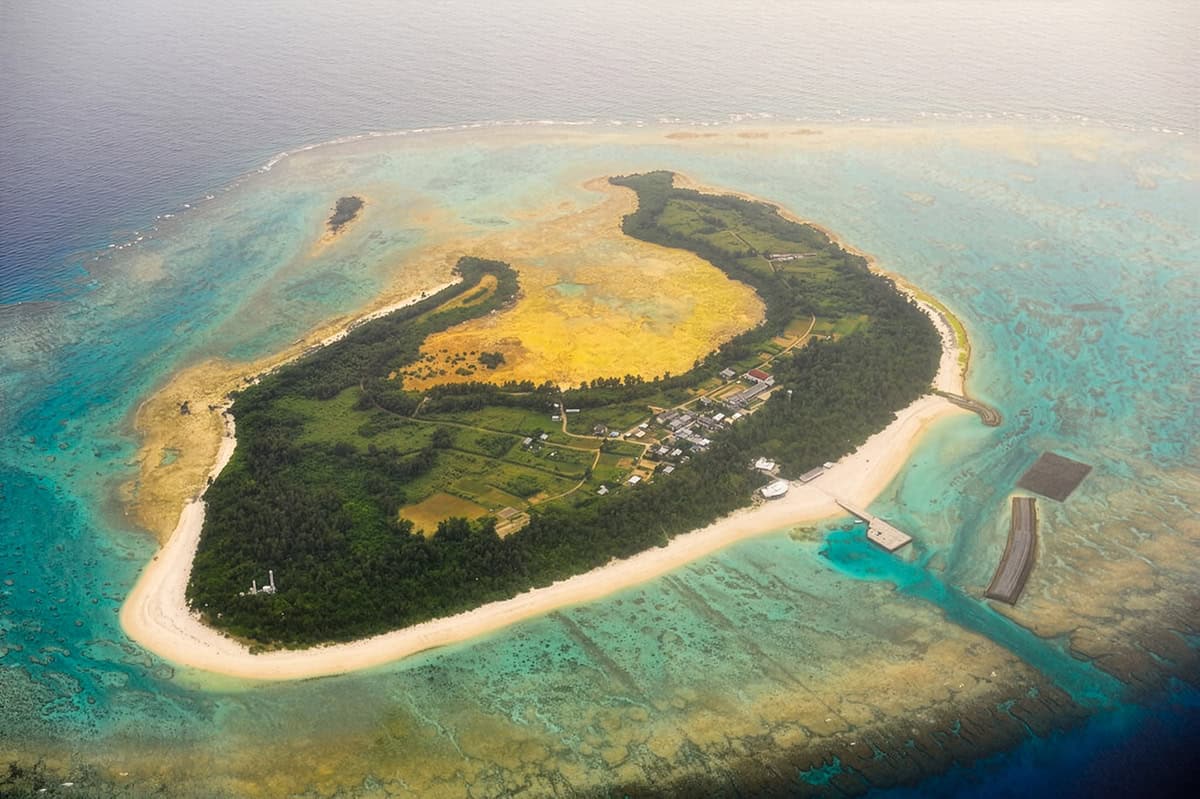
This tiny croissant-shaped island is spoiled with lush beaches and crystal-clear swimming spots. We heard it was one of the best islands for water sports, so we had to go and see for ourselves!
We can confirm Minna Island one of the best spots for scuba diving we came across in our time in Okinawa. The water is so clear and still that you can see up to 30 meters below. If you’re not so keen on snorkeling or scuba diving, you can try out parasailing instead.
To reach Minna-jima from Okinawa Island, you’ll have to catch a ferry from Toguchi Port in Motobu. It takes less than half an hour to reach this tropical paradise. To make life simple, you can also book this scuba diving tour that leaves from the mainland and takes you to the breathtaking coral reefs around Minna-jima island.
Visit The Miyako Islands
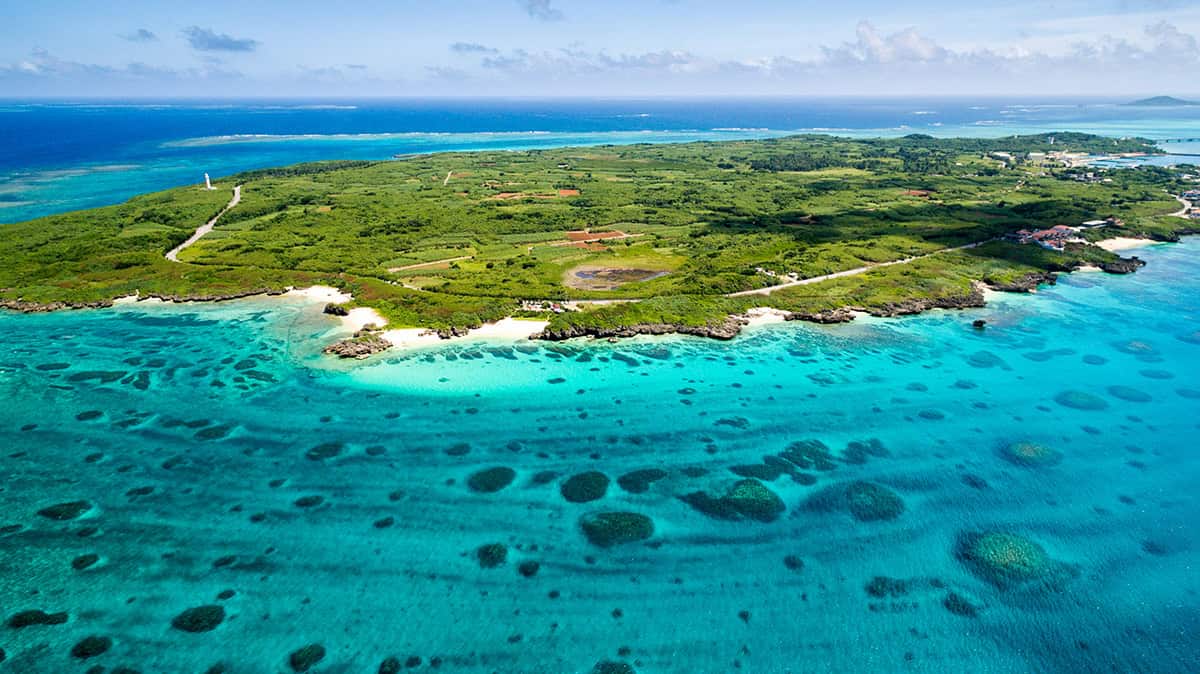
The Miyako Islands are a cluster of six islands that are grouped together and are a part of the Okinawa Prefecture. The main island is Miyako Island, called Miyako-jima in Japanese. It’s known for having some of the most impressive beaches in Okinawa as well as epic coral reefs.
Miyako Island is especially charming thanks to the sugar cane fields that blanket much of the landscape. The island isn’t huge, but it has several small towns and lots of resort hotels to stay in. And a bonus: there are no poisonous habu snakes here.
Take the kids swimming at Maehama Beach

This giant beach on the southernmost part of Miyako often ranks amongst the best beaches in Japan. It’s 7 kilometers (miles?) long, so there’s plenty of space for everyone, even on busy days.
It is a great beach for families because the waves tend to be calm, and there’s a rental shop where you can hire SUPs, kayaks, and snorkeling sets. Hire out some equipment and enjoy a fun-filled day out with the family. Maehama Beach has something for everyone!
Soak in the sun on Sunayama Beach
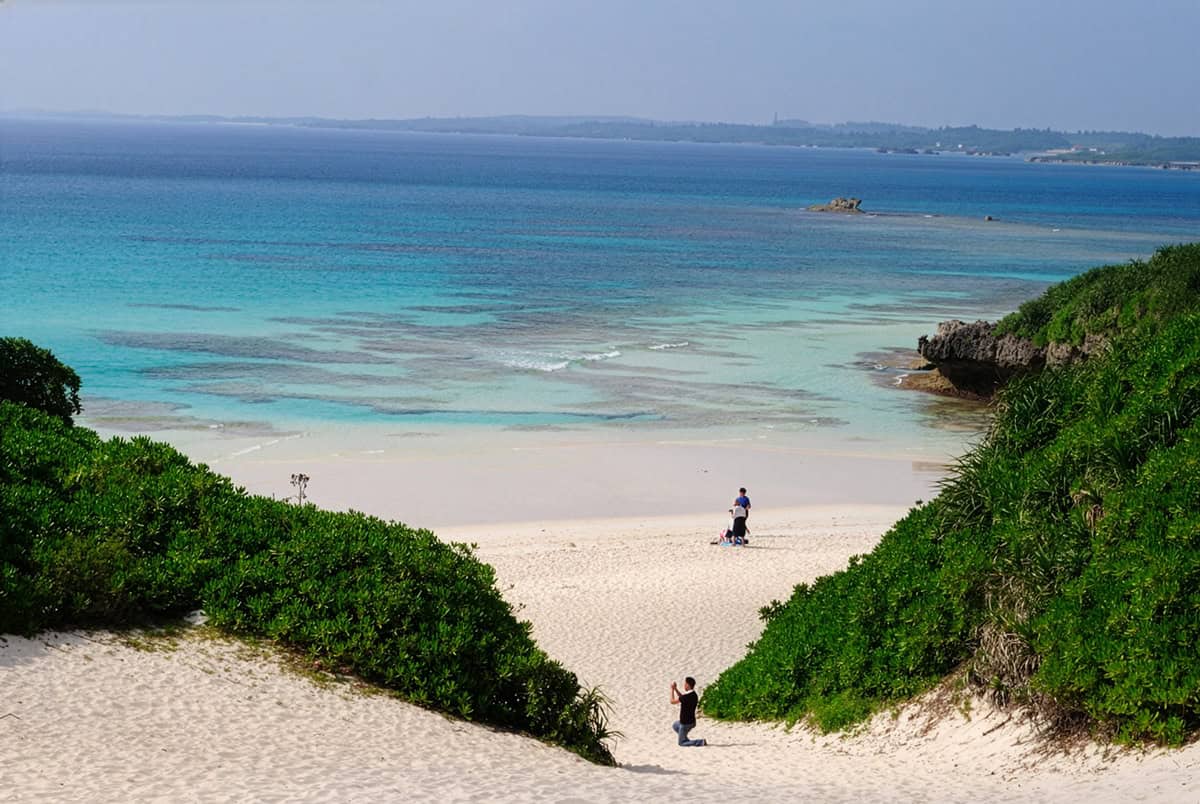
This picture-perfect tropical beach has it all. The water is bright blue, the sand is white and soft, and there are epic rock formations along the shore. It’s a great place to go for a dip, or to laze on the beach with a book in hand.
You can drive your rental down to the parking lot, and then from there climb over a sand dune to reach Sunayama Beach. There are also showers and toilets, ideal for freshening up after a day in the water.
Scuba dive at the Yabiji coral reefs
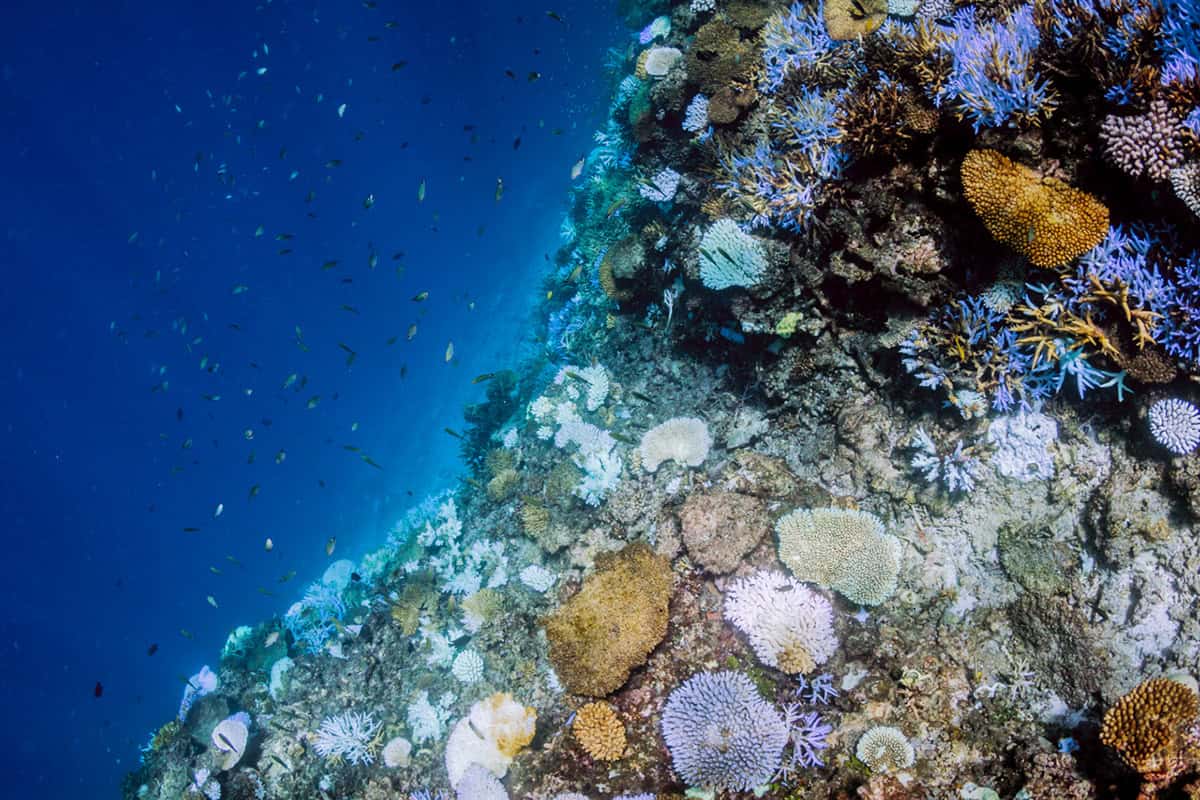
There are more than 100 individual coral reefs that make up the Yabiji corals, which are claimed to be Japan’s largest coral reef network, though it’s hard to quantify that exactly. Either way, it’s an awesome spot to go scuba diving.
The corals are north of Miyako Island, near the smaller island of Ikema. There aren’t any big international tour operators that run tours there, but we found Open Gate, a local tour company that runs trips to Yabiji. Check out the snorkeling and scuba diving trips they run.
Our trip to Yabiji was a highlight of our trip, mainly because we got to swim right by some friendly sea turtles! The colors of the corals and the number of different tropical fish species we saw were out of this world.
Visit the historical Tuyumya Grave
There’s more to Miyako than just gold sand beaches. The island also has a rich history and cultural heritage. One spot worth checking out is the Tuyumya Grave, where Nakasone Tuyumya was buried.
He was a leader of Miyako back in the 16th century, and the large burial ground is also where his descendants were laid to rest. The grandiosity of the grave gives away how important they were. The burial is made out of large stones stacked on top of one another, and reminded us of some of the old ruins we’ve seen in Mexico.
Cycle across the Irabu Bridge

To connect some of the main islands in Miyako, the giant Irabu Bridge was built. It stretches 3.5 kilometers over the sea and connects Irabu Island with the main Miyako Island. You can cross it by car, on foot, or on a bike.
We wouldn’t recommend doing it on foot as it’s a fair way if you walk there and back, so we decided to rent bikes instead. The views of the islands and the ocean from the bridge are epic!
Visit The Yaeyama Islands

If you’re like us and you’re keen to spend as much time outdoors exploring nature, hiking arduous trails, and getting up close with the local wildlife, then the Yaeyama Islands will be your favorite of all the Miyako Islands.
Made up of 23 islands, we quickly realised we’d need to narrow down which islands to visit on our trip. We decided on Iriomote, Ishigaki, and Taketomi in the end – and we don’t regret our decision!
Explore the jungle on Iriomote Island

Known as the ‘Galapagos of the East’, Iriomote Island is covered in thick jungle, home to rare wildlife, and a network of mangrove forests. It’s the heart of adventure in the Okinawa Islands!
Seeing as 90% of the island is jungle or mangrove forest, it’s not surprising there’s no airport and the island can only be reached by boat. But the remoteness of Iriomote adds to its charm.
Let’s take a look at some of the coolest things to do on Iriomote Island.
Go Mangrove Kayaking on Iriomote Island
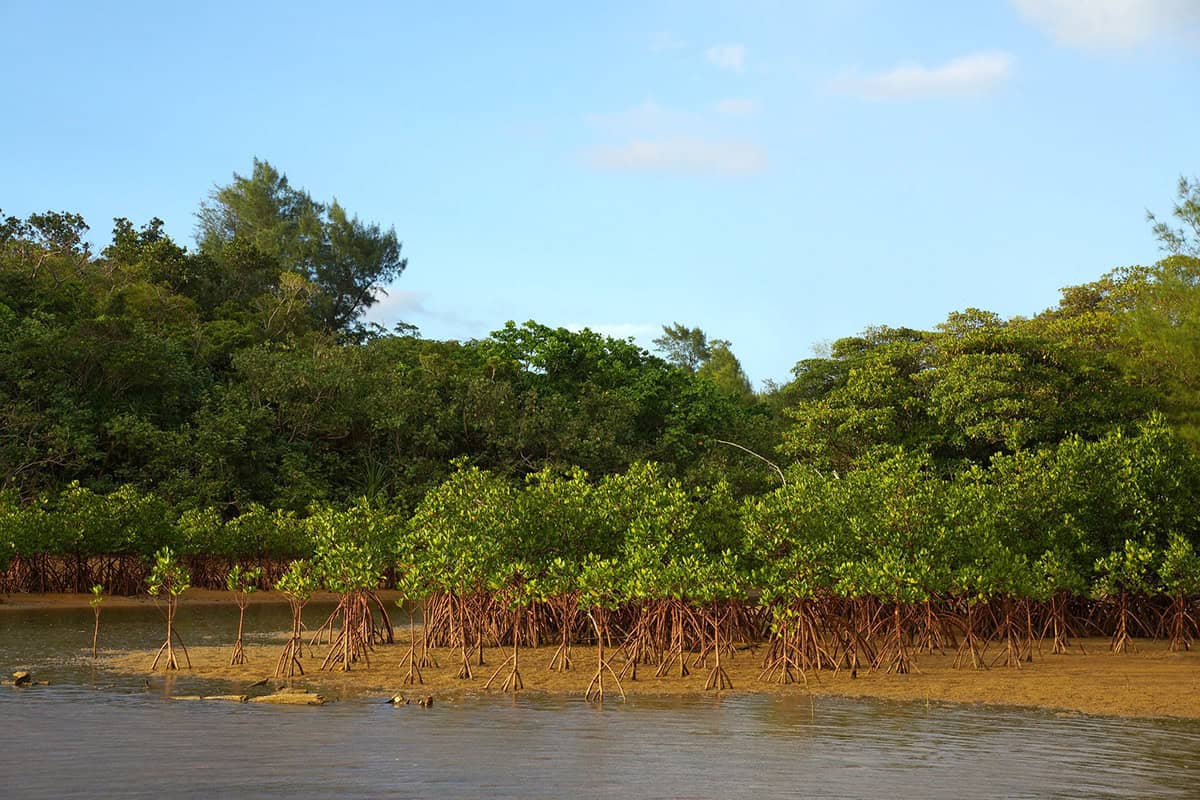
Kayaking downriver through the thick mangrove forest is a must on your trip to Iriomote Island. It’s an island classic, a sort of rite of passage for every visitor. The sound of bird song and ominous jungle noises accompanied us as we paddled downstream, heading further and further into the dense mangrove.
After a while, our instructor told us to pull up on the riverbank. We parked our kayak and hopped out, then headed on a hike through the mangroves. Our guide pointed out some of the exposed mangrove roots and explained that the trees are more than 300 years old!
As we walked along, our guide also pointed out some of the local wildlife. We doubt we would have spotted a lot of it without his expertise, especially things like the brown beetles clustered in their hundreds beneath tree leaves, and varieties of lizards and frogs hidden in the undergrowth. Check out the tour we went on.
Keep a lookout for Iriomote wildcat merchandise
Some of the most unique souvenirs you can get in the Okinawa Islands are the Iriomote wildcat-inspired souvenirs. This critically endangered wildcat isn’t found anywhere else in the world, and it is estimated that there are only around 100 of them left on Iriomote Island.
It’s rare to spot one in real life as they’re largely nocturnal and they tend to hide away in the dense jungle and mangrove forests! As a consolation to ourselves, we picked up some key rings as gifts to take home for everyone.
Go on a nighttime hike through the jungle
The other amazing thing about being on a remote island with few inhabitants is the night sky. With no light pollution around, the stars are bright and visible. Walking through the jungle and along the beach at night is incredible, and we were surprised by how different the landscape felt from how it had felt during the daytime.
The other amazing thing about going on a night hike is that there are loads of nocturnal animals on Iriomote Island that you can’t see during the day. We came across giant crabs, noisy frogs, and birds.
Understandably, it’s not safe to trek through the jungle at night by yourself – you need to book a local guide. We went on this amazing tour and had a great time with our friendly guide.
Discover Local Culture At Taketomi Island
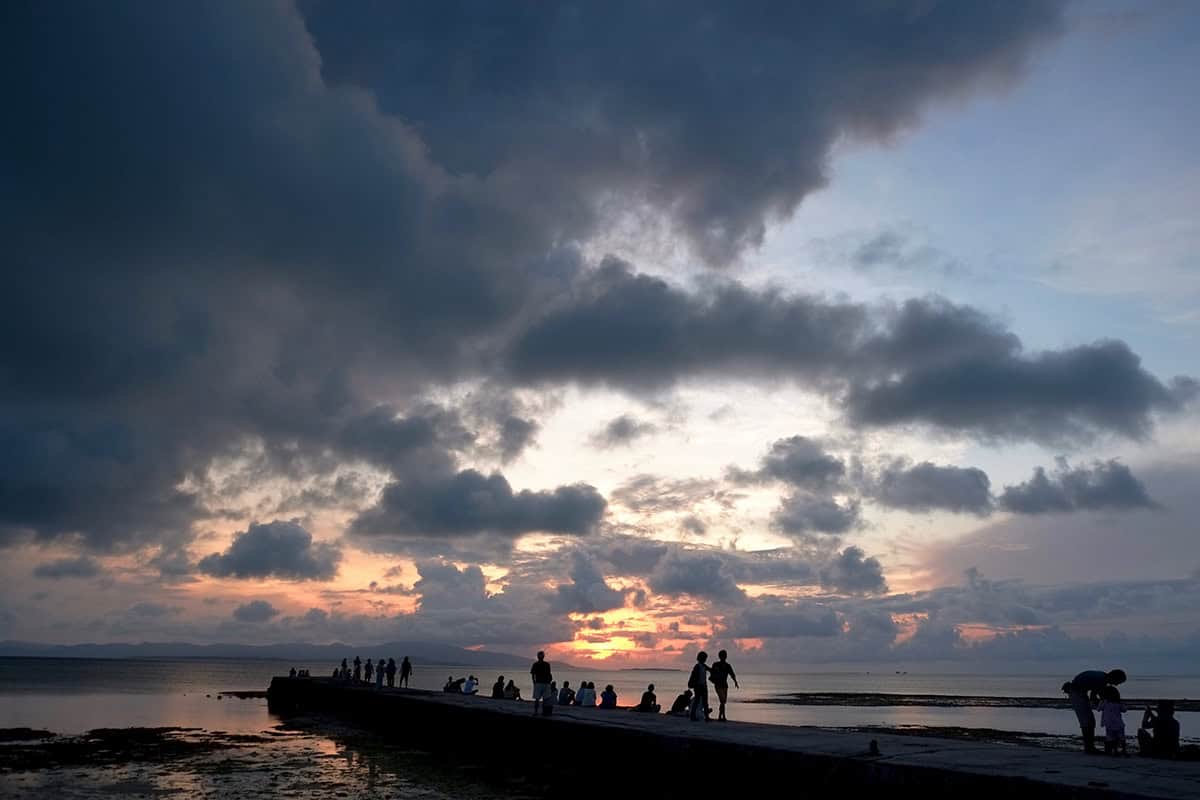
Another of the Yaeyama Islands, Taketomi, is worth a visit and one of our favourite places to visit in Okinawa.
If Iriomote is the wildlife capital of Okinawa, then Taketomi is the culture capital. It’s dotted with cute traditional villages, and water buffalo are still seen dragging carts around the island as a form of transportation.
Ride a water buffalo cart

One of the coolest things you can do on the island is join a traditional water buffalo cart tour. The island is very small and has a single town on it, so you’ll get to explore most of it on your tour. One of the coolest things is the Okinawan music they play on the sanshin, a stringed instrument from the area, along the way.
We also noticed that our driver rarely gave the buffalo any instructions – the friendly beast seemed to know the route off by heart!
Check out the view from Nagominoto Tower
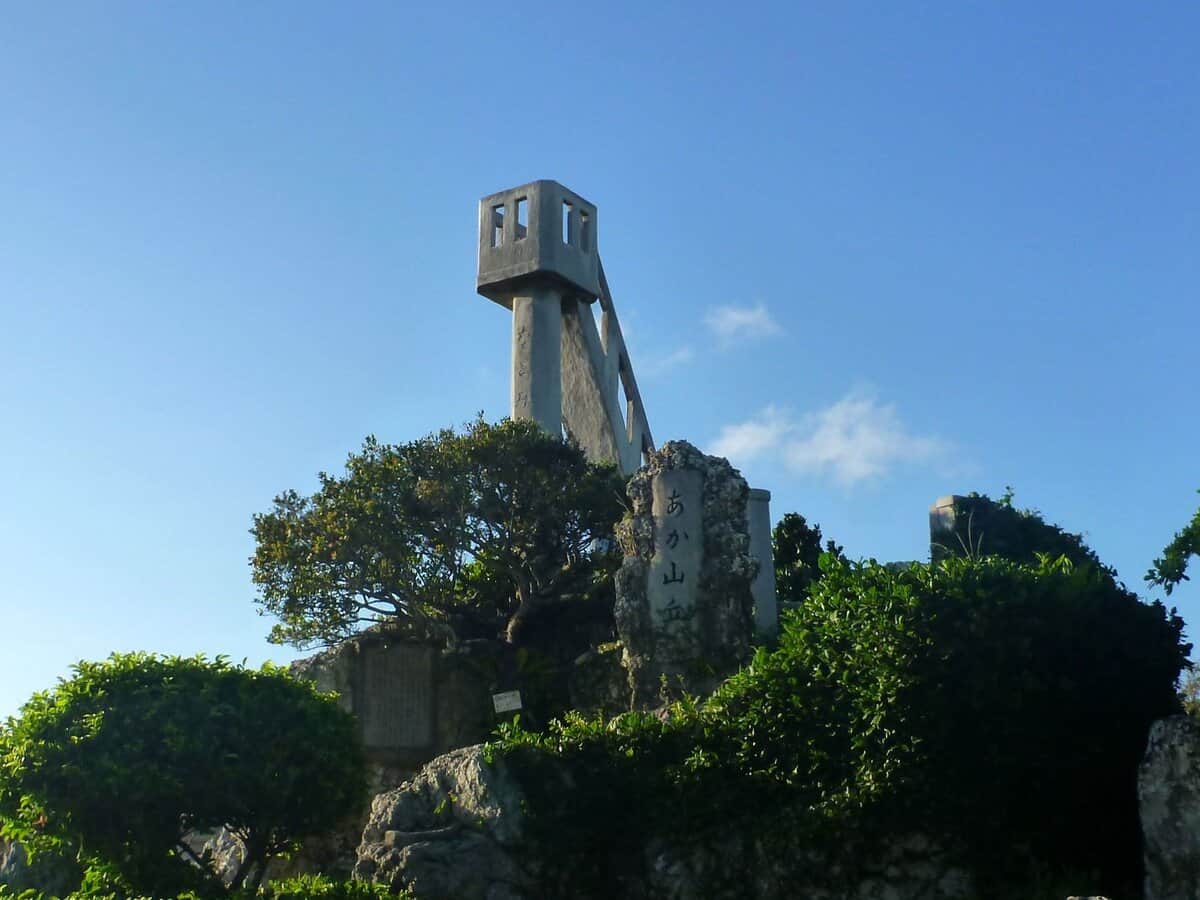
Whilst you’re on the island, head to the 4.5-meter-tall Nagominoto Tower. It sits in the center of the village on a small hill, so there are awesome views over the island. You can see the traditional red-tiled roofs of the old Ryukyan village houses and the glimmer of the sea in the distance.
Sadly, you can’t climb to the top of the tower anymore, but it’s still worth a visit whilst you’re on the island.
Activities We Recommend Booking in Advance
Make sure you don’t miss out by booking these awesome tours in advance. Japan can get busy, especially in spring and autumn – so don’t leave it until the last minute.
- Okinawa Blue Cave – Book this snorkeling tour to the Okinawa Blue Cave ahead of time. Going to the island’s Blue Cave is high on most travelers’ Okinawa bucket list, so make sure you don’t miss out by booking in advance. The instructors were super friendly and we had an awesome time.
- Photoshoot – Hoping to leave Okinawa with some unique travel pics? Then book a photoshoot at this ryusou studio. Their ryusou gowns are the traditional costumes that were worn in the Ryukyu Kingdom, which is now modern-day Okinawa!
- Okinawa World – Grab your entry tickets to Okinawa World ahead of time here. If you want to make a full day of it, you could opt for this epic tour instead. It takes you to Okinawa World as well as visiting other attractions in the area like the Itoman Seafood Market, Ashibinaa Outlet, and Cape Chinen Park. It is a really good value way to see a few attractions in one go.
- Scuba Diving – Don’t miss out and book this awesome scuba diving tour. It leaves from the Yamakawa Port on Okinawa’s main island, then takes you out to the colorful coral reefs around Minna-jima Island. The great thing about scuba diving is that you don’t actually have to have previous experience. The instructors were super friendly, and we felt safe the whole time we were underwater. We can’t recommend it enough!
- Mangrove Kayaking – Kayaking through the mangrove forests in Iriomote Island is a must, so book this epic tour well in advance. We had a blast. Not only did we discover loads of wildlife and love the kayaking, but we also got to cook outdoors in the wilderness and go for a dip in the swimming pools deep in the jungle.
- Iriomote Tour – Spend a night exploring the jungle on the ‘Galapagos of the East’ and get familiar with the nocturnal wildlife that few travelers will get to see. The best part? The clear sky and stars at night are dazzling. We highly recommend this amazing tour option!
- Water Buffalo – Try out one of the oldest forms of transport out there on this water buffalo cart tour around Taketomi Island. The animal weaves in and out of the town’s narrow streets at a pace that’s slow enough for you to be able to take in the architecture and enjoy the scenery!
Go Deeper In Okinawa
This is our very first Okinawa guide, so we don’t have any more region-specific guides to point you to. That doesn’t mean we don’t have any more posts that will help you plan your trip or get you inspired to visit other regions of Japan.
Here are just a few:
- Not sure if Okinawa is the prefecture for you? No worries, you can compare Okinawa to Japan’s other regions by reading our How To Decide Where To Go In Japan guide. This hefty guide breaks down each of Japan’s regions, giving you a good idea of what there is to do and the general vibe of each, so you can make sure you’re getting it just right.
- Want to try ordering ramen like a local on your next trip to Japan? Then check out our awesome Rosetta Stone Japanese guide, where we uncover whether the Rosetta Stone App is any good for learning Japanese. We tried over and over again learning Japanese, but we didn’t make much headway until we discovered this awesome app – try it out for yourself!
- The Art Of Trip Planning – This handy guide isn’t region-specific, so it’s useful wherever you’re going on your next trip. It doesn’t matter if you’re a first-time backpacker or an old hand at the art of traveling, we promise you’ll find a new trick that will save you time, money, and stress! With this guide, you’ll be an expert traveler in no time.
- No one is ready for a trip to Okinawa until they’ve read our 18 Of The Best Apps For Japan Travel guide. We recently extended it from 12 to 18 apps, so there are new hot tips that will help make your travel adventure a breeze. From language apps that will help you overcome language barrier problems to awesome navigation apps that will keep you from getting lost on the region’s volcano hikes, these 18 apps are a must.
Our Okinawa Travel Tips

You know what there is to do on the island now, but you’re probably wondering what else you need to know ahead of your holiday to Okinawa? There are so many things to consider when you’re planning a trip, so let us give you a hand.
We’ve put together this handy section so you can get your bearings without having to do hours of research.
When is the best time to go to Okinawa
The weather in Okinawa’s islands is different from the rest of Japan. Because it’s the southernmost prefecture, it has a much more tropical climate. Unlike famous cities like Tokyo and Osaka that experience four very distinct seasons, Okinawa is tropical year-round.
It does get slightly colder in January and February, but it’s still sunny and warm!
That said, there are still some better and worse times of year to visit. Visiting in summer can be a bit risky because that’s when typhoon season is. The worst of it tends to hit in August and September, so it might be a good idea to avoid those months if you can.
If you’re traveling on a budget and hoping to get the best flight and hotel deals, or you just hate big crowds, then you should also avoid coming in April or November. It also gets pretty busy in July.
We reckon March is the best time of year to come. You’ll just miss the worst of the crowds (who flock to mainland Japan to see the cherry blossom), and the weather is great this time of year.
What you shouldn’t miss in Okinawa
There are so many epic things to do in Okinawa that narrowing it down to a few ‘must-do’ activities is no easy feat. We think everything in this guide is worth doing, but if we had to pick our favorites, it’d definitely include scuba diving at the Yabiji corals.
We’d also put kayaking through the mangroves on Iriomote Island at the top of our list. Also, it’s hard to beat the feeling of riding a cart being pulled along by a water buffalo through the traditional town of Taketomi Island, so that’d be on there too.
If you’re wondering which were our favorite beaches, we’d have to say the golden sand beaches on the croissant-shaped Minna-jima Island.
There isn’t as much information online about Okinawa compared to other prefectures, so we know it can be confusing figuring out where to go. Hopefully, that gives you a good idea of what to prioritise during your time in the Okinawa Prefecture!
- Bring plenty of cash – Japanese is still a largely cash-based country, and this is especially true on Okinawa’s remote islands. Don’t rely on there always being an ATM nearby. In fact, we’d suggest bringing more Yen than you think you’ll need, just to be on the safe side.
- Have a translator at the ready – Because the islands in Okinawa prefecture are even more remote than some of the rural parts of mainland Japan, it’s not unusual for the locals to speak little or no English. Get used to having your translator app at the ready as you explore!
- Don’t rush your trip, make sure you have at least a week or two to explore – We wouldn’t recommend trying to squeeze Okinawa into a weekend break or short add-on to your mainland Japan itinerary. There’s so much to do, and it’s so different from the rest of Japan that setting aside at least a week will mean you get more out of your trip.
- Make sure you’ve always got sunscreen in your pack – The tropical climate in Okinawa means that there’s always the risk of getting sunburnt. Avoid ruining your holiday and make sure you’re reapplying sunscreen throughout the day.
- Get familiar with the wildlife before your trip – There were a few things we didn’t know about, like the island’s poisonous spiders and snakes, which were a nasty surprise. But we also think it’s worth finding out about the island’s friendlier wildlife, like the lizards, frogs, turtles, and fish that live on the island. That way, when you’re out on a wildlife tour or snorkeling in the sea, you’ll have some idea what you’re looking at.
How to get around Okinawa:
As you might imagine, getting around Okinawa’s numerous islands involves a bit of creativity. There are some main modes of transport on bigger islands, like the Yui Rail on Okinawa Island, but smaller islands won’t have as much infrastructure.
The main international and domestic airport in the Okinawa Prefecture is Naha Airport. It’s on Okinawa Island, which is where we recommend starting your trip anyway. There won’t be any direct flights from the US and Europe, so you’ll likely need to change over in Tokyo and catch a domestic flight for the last leg of your trip.
There are local buses on a lot of the bigger islands, and when we were on smaller islands, we were often there on a tour or we rented bikes and peddled around, so it didn’t matter too much. That said, renting a car could be a good option whilst you’re in Okinawa. You’d be able to reach out-of-the-way attractions and secluded beaches that other travelers can’t get to.
Booking tours is another great way to get around. We know it can get expensive to book lots of tours, but all the trips we did with guides in Okinawa were super affordable, so they shouldn’t make a dent in your bank account.
When you’re getting between islands, you’ll largely rely on local ferries. There are often express ferries as well if you want to get there quicker. For longer trips, there are also domestic flights between Naha Airport and islands like Miyako and Yaeyama.
Common travel mistakes:
- Make sure you sign up for the Okinawa World craft workshops at reception when you arrive – We missed out on some of the craft workshops because we didn’t realise you had to sign up. When you arrive, head straight to reception and get your name put down for the workshops you want to get involved in. They don’t all get booked up, but some do.
- Remember that you’ll need to cover up your tattoos on Japanese beaches – The rules on tattoos are still pretty strict in Japan. It might not be explicitly mentioned that you need to cover your tattoos on the beach, but because of the cultural associations of tattoos with organized crime, we suggest covering them up just in case. Luckily for you, you won’t be the first person to come up against this problem! The Suhada Seal is a sticky, skin-colored patch that you can stick over your tattoos to cover them up. Make sure you take enough to last your full trip. It would suck to miss out on lounging in Japanese hot springs because of a tattoo.
- Keep a lookout for habu snakes when you’re out hiking – The Okinawa habu is a species of pit viper that lives on the Okinawa Islands. They’re seriously poisonous, and they can be a bit temperamental. Whilst most snakes tend to hide away from people, the habu snake likes to chill in the sun on paths or low-hanging branches, so watch where you step!
- Read about the island’s network of ferries ahead of time – We didn’t plan our ferries ahead of our trip, so we wasted a lot of our holiday time scrolling through ferry schedules and figuring out which port we had to travel from. Check out the Visit Okinawa Japan website to find out more.
What To Pack For Okinawa

This handy packing list is here to help you make sure you don’t forget anything important! You can even print it out and use it as a checklist ahead of your trip:
- Pack comfortable shoes. You’ll be going on lots of hikes on this trip, especially if you visit Iriomote Island.
- Bring a lightweight raincoat if you’re visiting during the typhoon season.
- Don’t forget your flip flops!
- Pack plenty of sunscreen.
- Add a quick-dry towel to your bag for beach days.
- Bring hand sanitizer. It’s not unusual for there to be no soap in public and restaurant toilets in Japan.
- Bring your best camera. You’re about to make memories you’ll want to remember for a lifetime, so make sure you capture them in high quality! You might also want to consider bringing other accessories like selfie sticks and camera hood lenses.
- Pack some Suhada Seal tattoo patches so you can cover up your tattoos at the region’s hot springs.
- Remember to pack a travel adapter. You’ll need a two-pronged Type A for Japan, so check your plugs to see if you need to get an adapter ahead of your trip.
- Get some Japanese Yen ready before your trip. It’s always a good idea to pack some cash in the local currency before your trip, in case you need cash to pay for your transport from the airport or you find yourself in a sticky situation.
- Check ahead of time that you can use your bank card to take out Japanese Yen whilst you’re abroad without being charged hefty fees! If not, plan ahead and bring all the travel money you think you’ll need. In our 10-day Japan itinerary, we estimated that it costs about $147 per person per day to travel in Japan.
- Check if you need a Visa ahead of your trip! Most countries don’t need a Visa for a short holiday in Japan, but make sure you check the unique requirements for your country so you don’t run into any unexpected problems. You can find out more on the Ministry of Foreign Affairs of Japan website.
Dive Head First Into Okinawa’s Gorgeous Beaches, Mangrove Forests, And Rich Heritage
Put together the rare wildlife, gold sand beaches, and tropical weather and it’s easy to see why we fell head over heels for Okinawa. Plus, the hospitality of the Okinawan people was the cherry on top.
Make sure you set aside at least two weeks if you want to properly explore the top things to do in Okinawa such as Iriomote, Okinawa Island, and Miyako Island. Each one is so unique, it’d be a shame to have to skip any of them.
Get ready for the adventure of a lifetime!
Frequently Asked Questions
Okinawa seems to be overlooked by a lot of travelers. It’s a popular place for holiday makers from mainland Japan, but it doesn’t seem to attract as many foreigners from abroad. Personally, we think that’s a great thing!
After spending a few weeks there exploring the main islands, we can confirm that Okinawa is 100% worth a visit. It almost doesn’t feel like Japan. The weather is tropical, and the crystal clear waters on the beaches look like they belong in a picture book. It has everything that mainland Japan is lacking.
The weather is warm and sunny year-round in Okinawa, as it’s the southernmost prefecture in Japan. When everyone in Hokkaido is wearing their winter jackets and snow boots in December, Okinawa is blessed with tropical weather.
We reckon March is the best month of the year to visit Okinawa. Most tourists will have flocked to mainland Japan to see the cherry blossoms, so there are fewer crowds, plus it means you’ll miss typhoon season which is from June to October.
That’s a tricky question to answer. Ideally, we think you need roughly 2 weeks to properly explore all the most popular islands. Of course, with more than 150 islands in the prefecture, you could travel around Okinawa forever.
Because it’s a bit harder to travel around than mainland Japan, we don’t recommend trying to see Okinawa over a weekend. Visit when you’ve got a proper amount of time to make the most of your trip.
While you’re in Okinawa, make sure you try the unusual irabu (sea snake) soup on Kudaka Island, as well as other local dishes like okinawa soba (a noodle dish made from wheat flour) and goya shanpuru (a local tofu stir fry dish).
Another must-do if you’re a culture enthusiast is getting dressed up in a traditional ryusou gown at a photoshoot. It’s a fun way to spend an afternoon in Naha, the capital of Okinawa Island. If it sounds like your kind of thing, then look into booking a session at this ryusou studio.
We found that the Okinawan locals were incredibly friendly. They are less used to seeing foreigners, so perhaps it’s still a novel experience (especially on more remote islands).
We also think the weather makes a difference to people’s mood, so perhaps it’s the sun and sand that make people in Okinawa so friendly.
Read More About Japan
If you’re in the middle of booking your trip to Japan, here are the most important places you need to go to book:
JR Pass
The two most reliable places we always check are JRailPass and JRPass. If you are taking long distance Shinkansen across multiple region, get the full JR Pass. If you’re focusing on one specific area, you only need a JR regional pass. The official booking platform is Smart-Ex.
Shinkansen
The JR Pass prices have gone up and for many of you, it’ll make more sense to book tickets individually. The secret is that when you buy your Shinkansen tickets through Klook offers special vouchers for Don Quijote and BIC when booking. Their tickets are super easy to redeem as well. Right now, use code SKS10OFF to save $10 USD off.
Tours
While Viator and GetYourGuide are our go-to’s, Klook and KKDay are much popular in Asia so it’s always worth comparing across all of them to make sure you get the best price. With Klook, use code GOINGAWESOMEPLACES to save up to 8% for new users and 3% for existing users.
Pocket Wifi

While we do love eSIMs, having a pocket wifi is great for sharing data with a large group. The most popular is NinjaWifi which is easy to pick up at the airport. Use code AWESOME15 to save 15% (automatically applied). Alternatives are offered by JRPass and JRailPass but they aren’t as cheap. For a more global solution, consider Solis and PokeFi.
Car Rental
Big companies such as Budget, Avis, and Enterprise operate in Japan but they’re usually the most expensive. The best companies are the local Japanese ones such as Toyota, Nippon, Orix, Nissan, and Times Car Rental. To make things easier, use Booking’s car rental platform and Klook to compare prices all in one place. Don’t forget, you need an IDP to drive in Japan so get one before you leave your home country.
Learn Japanese
It helps to know even a bit of the language before you go. Start your learning with Rosetta Stone Japanese.
Cash or Credit
Cash is still very important to have in Japan but when you use credit cards, make sure you’re not getting charged those extra exchange rate fees. The best card right now is the Wise Multi-Currency Card which is actually a debit card where you can convert at favorable rates beforehand. This cuts out any sneaky transaction fees.
Travel Insurance
Make sure you’re covered in case something happens. Get quotes from HeyMondo where booking through our link gets you 5% off automatically and if you’re from Canada, get quotes from RATESDOTCA.
Shopping
Discovering Don Quijote is a quintessential part of the Japan experience. The secret for tax-free shopping is that they have a coupon that can help you save 10% off + additional 5% off if you spend ¥10,000 or more. If you’re interested in coupons like this, we have them stored on our Goodies page that Insiders can access. Join today!