

The United States Coast Guard has seized more than 200,000 pounds of cocaine from foreign drug traffickers and cartels since August, attributing the haul over the last six months to a particular mission.
Operation Pacific Viper was launched in early August, described as a counter-drug operation invested in minimizing and intersecting drug trafficking taking place in the Eastern Pacific Ocean—a region known as a primary corridor for narcotics being smuggled by individuals and crime entities from Central and South America. Roughly 80% of narcotics interdictions occur at sea, per the Coast Guard.
“Operation Pacific Viper has proven to be a crucial weapon in the fight against foreign drug traffickers and cartels in Latin America and has sent a clear message that we will disrupt, dismantle and destroy their deadly business exploits wherever we find them,” U.S. Department of Homeland Security Secretary Kristi Noem said in a statement. “In cutting off the flow of these deadly drugs, the Coast Guard is saving countless American lives and delivering on President [Donald] Trump’s promise to Make America Safe Again and reestablish our maritime dominance.”
Enough Lethal Doses to Kill Millions
Military.com asked the Coast Guard whether the origins of the drug smugglers and cartel operations are known and kept track of by the Coast Guard and/or federal government, and also whether it’s known where the drugs that are seized actually come from.
“Maritime smuggling routes are intentionally complex and designed to obscure the source and ownership of shipments,” a USCG spokesperson told Military.com. “For operational and security reasons, we do not publicly release a breakdown of seizures by country or organization.”
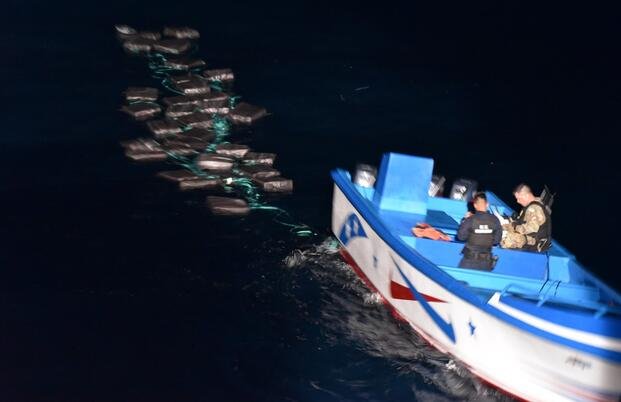
The Coast Guard added in its announcement that one dose of 1.2 grams of cocaine is enough to kill a person, concluding that the more than 200,000 pounds seized since August equates to over 57 million being saved from potentially lethal doses.
That number is intended to illustrate the significant public safety impact of these interdictions,” the spokesperson told Military.com.
The figure of 75 million potentially lethal doses is a calculation based on the total weight of cocaine seized divided by the estimated lethal dose per person. This does not imply that the cocaine would have necessarily resulted in 75 million deaths but rather highlights the scale of the threat these quantities represent if they had reached U.S. communities.
This latest announcement follows an eventful 2025, which officials described as a record-breaking year due to the seizure of almost $4 billion worth of narcotics in the Eastern Pacific and Caribbean. Last year’s numbers culminated in the largest annual maritime drug interdiction results in USCG history, with the seizure of more than 511,000 pounds of narcotics valued at more than $3.8 billion.
A USCG spokesperson told Military.com earlier this year that the service’s average annual seizure weight prior to 2025 was 167,000 pounds, with one kilo of cocaine worth $16,588.
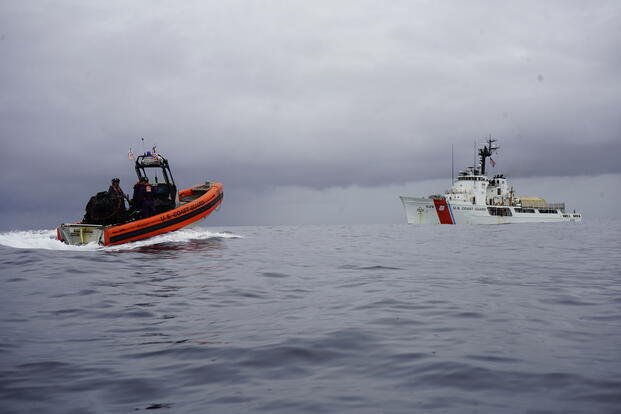
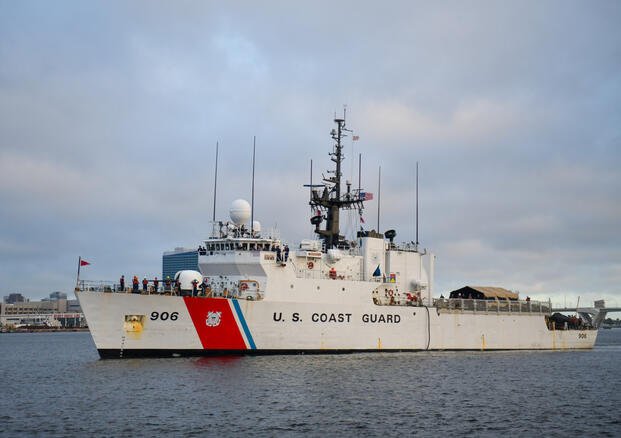
The Coast Guard reached this new milestone following recent interdictions of 13,337 pounds of cocaine by Coast Guard Cutter Seneca, and 13,263 pounds by Coast Guard Cutter Robert Ward.
What is Operation Pacific Viper?
Operation Pacific Viper launched last summer as a method to accelerate drug interdictions as part of what the Trump administration has extended into efforts to thwart transnational crime organizations and so-called narco-traffickers—the latter of which have been a point of emphasis by both protractors and detractors for months due to U.S. maritime attacks on alleged drug smuggling boats in the Caribbean and around Venezuela.
Drugs as part of the operation are intersected by way of cutters, aircraft and tactical teams—all of which work cohesively to disrupt not just cocaine trafficking but all other illicit drugs that could potentially pose risks to Americans.
The Coast Guard’s cocaine seizures over the past six months surpassed the 200,000-pound threshold due to a few hefty drug busts.
On Dec. 2, 2025, Coast Guard Cutter Munro seized over 20,000 pounds of cocaine in a single interdiction after disabling fire on what they described as a heavily laden go-fast vessel—marking the service’s largest at-sea interdiction since March 2007.
That bust was preceded by a string of four seizures across 10 days in November, as the crew of the Coast Guard Cutter James seized 19,819 pounds of cocaine.
By Dec. 9, more than 150,000 pounds of cocaine had been seized.
“Each Coast Guard drug seizure far from our borders prevents deadly drugs from reaching our communities and disrupts the profit that fuels narco-terrorists,” Adm. Kevin Lunday, commandant of the Coast Guard, said in a statement. “The success of Operation Pacific Viper proves that we own the sea, and the proficiency, vigilance and heart of our crews is our greatest strength.”