

In policing, good ideas rarely fail because they are reckless. They fail quietly, in the space between announcement and adoption, where there isn’t a strong bridge to help the idea cross barriers.
We are a profession built on responsibility. Chiefs and sheriffs understand that one poorly executed initiative can damage public trust that took decades to build. That reality shapes our culture. We test. We deliberate. We anticipate unintended consequences. And sometimes, in our effort to avoid irreversible mistakes, we default to the status quo.
| DOWNLOAD: 26 on 2026: A police leadership playbook
Where good ideas break down
A recent Harvard Business Review article, “Why Great Innovations Fail to Scale,” argues that strong ideas often collapse because organizations lack “bridgers” — leaders who collaborate across boundaries and align people with different priorities, constraints and fears. In corporate settings, that might mean connecting product teams, IT, compliance and executive leadership. In law enforcement, the boundaries are just as real, but they look different.
In our world, the bridgers are often those in front-line leadership roles.
The role of the sergeant as a bridge
Sergeants stand at the intersection of the chief’s vision and everyone else’s reality. They sit in meetings where strategic goals are discussed in terms of liability and long-term positioning. Then they walk into a roll call room filled with officers thinking about staffing shortages, report backlogs, yesterday’s critical incident and whether the new policy will keep them safe and effective on a night shift call.
If innovation is handed down without a bridge, it feels forced. If it is carried by a trusted sergeant, it feels operational and revitalizing.
The HBR authors describe three core functions of bridgers:
- Curating partners
- Translating across boundaries
- Integrating disparate efforts.
Those functions show up every day in effective police leadership.
Curating partners in law enforcement means knowing who needs to be involved before an initiative is launched. If a department is implementing a new use-of-force reporting platform, that conversation cannot live solely at the command level. IT must be involved early. So must the officers who will complete the reports at 3:00 a.m. An effective sergeant knows which informal leaders in the squad room will influence whether a change is embraced or resisted. Inviting those informal leaders into the process is a strategy often overlooked.
Translating between command and the street
Translating across boundaries may be the most critical skill. Command staff often frame initiatives around risk management, transparency and long-term trust and effectiveness. Officers frame the same initiative around workload and practicality. Both lenses are legitimate. The sergeant who can explain to officers how a policy protects them in court, while also explaining to leadership how certain language will land on the street, is managing morale and protecting the integrity of the change itself.
This relationship requires emotional maturity and contextual awareness. It also requires familiarity with effective change management principles and institutional knowledge. An effective champion of change understands that bridging demands the ability to manage tension without escalating it. It requires humility and the discipline to listen before reacting. In policing, that looks like a supervisor who can acknowledge skepticism without labeling it insubordination. Someone who can tell a chief, respectfully, “Here is how this will actually play out on midnights,” and tell an officer, just as respectfully, “Here is why this matters beyond tonight’s shift.”
Why implementation is where ideas fail
Integration is where many well-meaning efforts fade. A policy is written. Training is delivered. The department checks the box. But bridging is not a one-time act — it is sustained alignment. Sergeants ensure that what is said in training matches what is reinforced in the field. They correct drift. They gather feedback. They communicate upward when implementation creates unintended strain. They hold the idea steady when early frustration tempts people to revert to old habits.
In larger organizations, lieutenants and captains often serve as secondary bridgers, integrating across units and specialties. They balance patrol demands with investigative priorities. They connect data-driven initiatives with daily patrol decisions. When that layer functions well, bureaucratic silos begin to dissolve. When it does not, even strong ideas fragment into failed efforts.
One of the more sobering insights from the HBR piece is that bridgers often go unrecognized because their work is relational rather than dramatic. That reality is familiar in public safety. We celebrate arrests and dramatic rescues. We rarely spotlight the supervisor who prevents a reform effort from collapsing under resistance, and we do not often reward the person who absorbs tension so others can move forward.
If we want innovation in law enforcement to extend beyond failed pilot programs, we have to be intentional about identifying and developing bridgers. That means promoting supervisors not only for their technical skill, but for their ability to build trust across ranks and sustain change. It means valuing those who can balance urgency with patience. It means creating an environment where honest upward feedback is not seen as defiance, but as useful input.
Policing will never be a profession with a high tolerance for reckless experimentation — nor should it be. The stakes are too high. But thoughtful, strategic innovation is not reckless. It is responsible adaptation to contemporary challenges. And that adaptation requires people who can carry ideas across lines of organizational culture and perspective.
Bridgers are the connective tissue of law enforcement. They turn strategy into practice. They turn skepticism into ownership. They turn a cautious vision into sustainable, effective change.
Without them, ideas stall.
With them, they scale — strengthening both organizations and the communities they serve.
Continue the discussion
- Where do good ideas in your agency typically break down — and who is responsible for carrying them past that point?
- Who are the informal “bridgers” in your organization, and are they being used intentionally or left to operate on their own?
- What would change in your next rollout if frontline supervisors were involved from the start, not after decisions are made?
| NEXT: Gordon Graham discusses public safety and police leadership qualities

Grit gives emerging leaders the focus and follow-through to overcome setbacks, earn trust and deliver consistent results
When officers believe learning stops at tactics, they miss out on the broader development that sustains effectiveness throughout a career
Promotion doesn’t prepare you for moral gray zones, fractured teams, or public pressure — adaptive leadership does
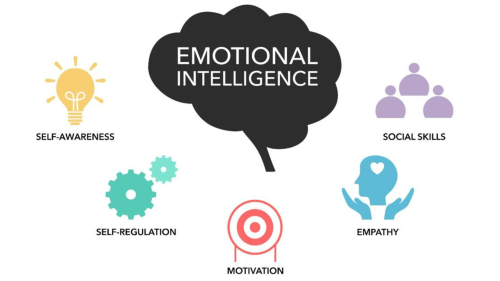
From self-awareness to conflict resolution, here’s how emotionally intelligent leaders earn trust and get results

Forget climbing the ladder. Be the leader your rookie self would be proud of
Grit-driven leaders model resilience for their teams, inspiring officers to approach difficulties with a sense of determination and unwavering commitment