

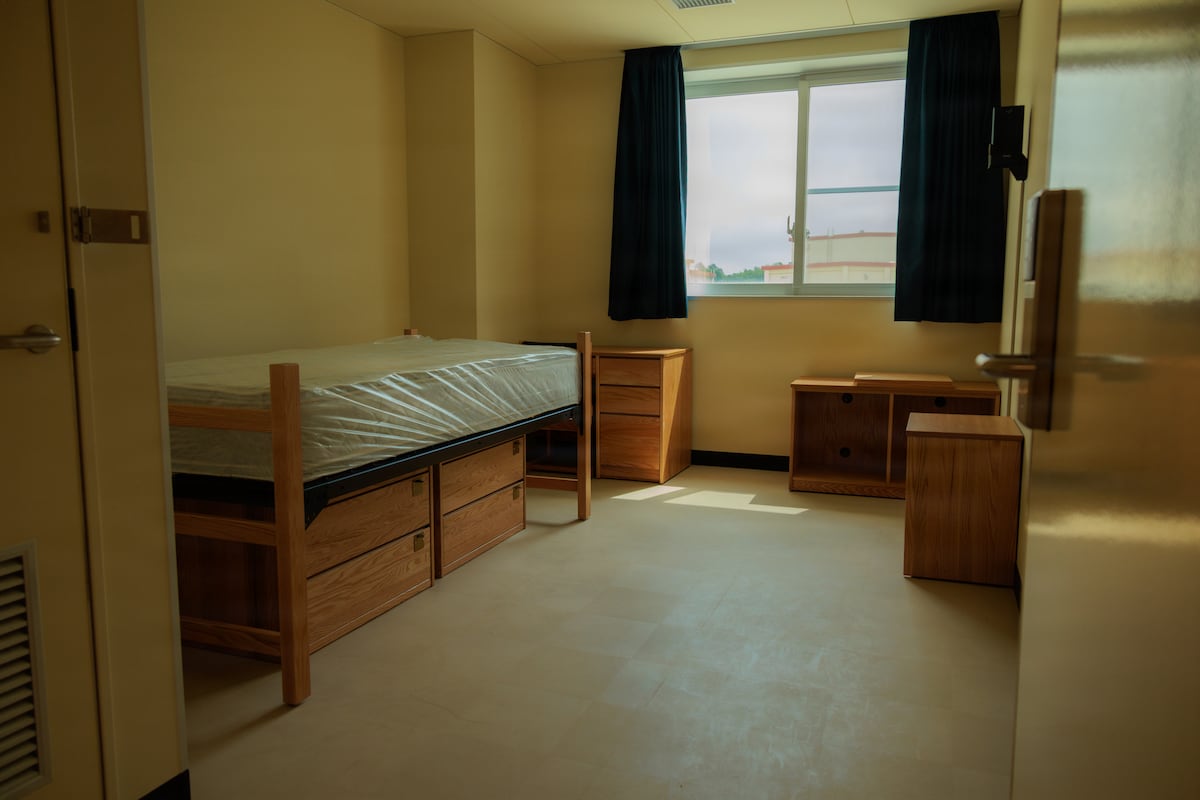
Earlier this year, the Marine Corps unveiled new barracks in Okinawa, Japan, where junior enlisted Marines will have private bedrooms, a departure from the service’s traditional shared-room model.
The announcement sparked speculation that similar barracks could be built elsewhere, but the service said the Okinawa complex is a unique case rather than a blueprint for installations in the United States.
A Marine Corps official told Task & Purpose this week that the service has no plans to build similar barracks for corporals and below at its U.S. bases.
The official said the Okinawa project differs from typical Marine Corps barracks because the Japanese government funded the $320 million complex as part of an agreement between the United States and Japan.
The official defended the service’s existing shared-room model, saying it “promotes camaraderie and small-unit leadership, which are foundational to the Marine Corps ethos.”
The official added that shared rooms also make more efficient use of available space and resources, “maximizing our ability to provide quality housing for all personnel.”
News of the private rooms was first reported by Stars and Stripes, which attended a ribbon-cutting ceremony at the facility in June. About 1,100 Marines are expected to move into the new barracks complex in August.
Joseph Scala, director of Camp Hansen, where the barracks are located on Okinawa, described the facility as “just phenomenal.”
“If I was Joe Scala, lance corporal, way back when … I would love to live here,” he told the outlet.
According to the Marine Corps, construction of the three new barracks was completed in May. In addition to private bedrooms, each unit includes a kitchenette, washer and dryer.
In announcing the project, the service called the facilities “a major step forward in the Marine Corps’ initiative to enhance the quality of life for enlisted Marines and Sailors.”
Daniel Terrill is a contributor to Military Times. He’s been reporting on military issues, the gun industry, and the outdoors for nearly two decades. Although writing is his passion, he’s been a Marine, police officer, and, perhaps the most dangerous job of his career, a substitute teacher.