

A deputy investigating suspicious circumstances involving a young woman found himself alone on a rural roadway facing a man armed with a long gun — and without a round chambered in his duty weapon.
Body camera video from the Feb. 27 incident shows the deputy speaking with the man and woman after receiving a report that someone matching the woman’s description had been walking along the road. The man told the deputy he had recently picked her up and planned to take her to family members in Sutter Creek, California.
His explanation immediately raised questions. The man said he had brought the woman, who apparently had no identification, to the isolated location “for a moment.”
The deputy separated the two and placed the woman in the back of his patrol vehicle while attempting to determine what was happening. When he told the man he intended to place him in handcuffs, the encounter escalated.
In a recent episode of the “Shots Fired” podcast, hosts Kyle Shoberg and Mark Redlich, along with retired officer and former K-9 handler Chris Bosson, reviewed the body camera video and identified several lessons involving equipment checks, positioning and decision-making under extreme pressure.
“This is every officer’s nightmare, but this plays out in real life,” Redlich said.
‘Please, just hands in the air’
As the deputy moved to detain him, the man reached into the back of his vehicle and pulled out a long gun.
“Drop the gun,” the deputy ordered before notifying dispatch that he was holding the man at gunpoint.
The video appears to capture the deputy cycling the slide of his handgun without ejecting a round, indicating there had not been a round in the chamber. The “Shots Fired” commentators also questioned whether the magazine contained ammunition, noting that the deputy later exchanged the handgun for another weapon.
For several minutes, the deputy calmly pleaded with the man to put down the firearm.
“Hey, man. I don’t want to shoot you,” the deputy said. “Please. Let’s go.”
The man continued holding the gun, at times walking away from the deputy and moving around the vehicle. He also repeatedly appeared to encourage the deputy to shoot him.
“He’s trying to get me to shoot him right now,” the deputy told dispatch.
Bosson interpreted the deputy’s unusually calm demeanor as an effort to prevent the situation from escalating while he figured out how to defend himself.
“The officer’s demeanor to me, the way I read it, is, ‘I need to keep this guy calm as long as possible and figure out something,’” Bosson said.
Reaching a backup weapon
During the standoff, the deputy moved to the rear of his patrol vehicle, temporarily losing sight of the armed man.
The video appears to show him placing his original handgun in the trunk and retrieving a second handgun from a holster. He later returned to the patrol vehicle for his rifle.
The panel said the decision to exchange handguns suggested the deputy knew his first weapon was not ready for use.
“There is no doubt that he switches guns,” Bosson said. “You can see in the top left, you can see him drop it, and you can even hear it clunk, and he pulls that other one out.”
The deputy later retrieved his patrol rifle, but the video does not appear to show him immediately chambering a round. The commentators noted that the deputy cycled the rifle only after holding it on the man for some time.
While patrol rifles are commonly stored with a loaded magazine but an empty chamber, Shoberg, Redlich and Bosson stressed that officers must chamber a round when the weapon is deployed.
The delay left the deputy vulnerable if the man had suddenly raised and fired his weapon, the commentators said.
Positioning allowed access to the gun
The commentators also examined the deputy’s positioning before the confrontation.
The suspect remained near the rear of his vehicle during the initial questioning, giving him access to an area where a weapon could be concealed. Once he retrieved the long gun, the distance between him and the deputy left little time to react if he raised it.
The commentators said officers should move detained subjects away from vehicles and other locations where they may have access to weapons.
Shoberg and Redlich also questioned the deputy’s decision to announce that he planned to place the man in handcuffs while standing alone and without first establishing greater control over him.
“The positioning of officer, suspect, vehicle, right? We don’t do that. Like he’s got full access to his trunk,” Bosson said.
Once the deputy appeared to realize his handgun was not ready, the commentators said his calm communication may have been his only way to keep the encounter from escalating while he tried to reach another weapon. They also debated whether he could have rushed or tackled the man when he initially reached for the long gun.
A calm response under extreme pressure
The standoff ended after the deputy warned the man not to move the firearm and then fired a shot. The man fell to the ground but continued holding the gun, prompting the deputy to repeatedly order him to move his hands away from it.
“I said put it down,” the deputy yelled. “Do not go for the gun.”
Although the commentators identified several tactical concerns, all three praised the deputy for maintaining his composure and continuing to provide information to dispatch.
“I’d like to start with saying that the officer’s composure was phenomenal,” Bosson said. “The entire time, he was absolutely professional, super mellow, very good radio traffic.”
They also credited the deputy with recognizing that the circumstances involving the woman did not make sense. Rather than accepting the man’s explanation and leaving, the deputy separated them and continued investigating.
Check your equipment before every shift
The most direct lesson from the encounter was also the simplest: Officers must confirm their weapons and other essential equipment are ready before going into service.
“You always check your gear before you leave the locker room,” Bosson said. “You always press-check your gun. You always make sure it’s loaded.”
The commentators said the deputy was fortunate the man did not immediately fire. But they also credited his ability to remain calm, communicate with dispatch and reach another weapon without prompting the man to escalate.
“I think he did a hell of a job with what he had to deal with, right? I mean, we could talk the tactics and the mistakes and stuff, but he had a scenario … a live scenario … a nightmare scenario — that, quite frankly, he handled pretty well for what he was, what he had gotten himself into,” Bosson said.
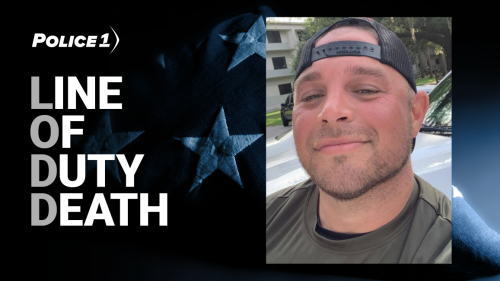
Deputy U.S. Marshal Michael Andrew Hanson, 36, was killed while serving a warrant on a fugitive wanted for sexual battery; the suspect is in custody
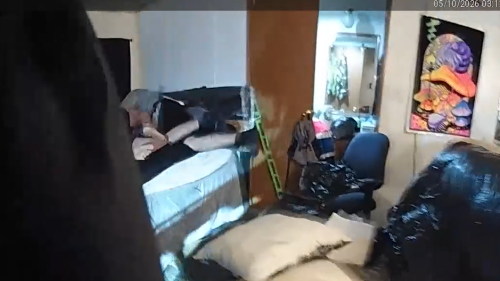
Clarence A. Frazier Jr., 48, of Alexandria, was charged by criminal complaint with the murder of Deputy U.S. Marshal Drew Hanson

The policy shift is temporary while officers undergo additional vehicle stop training tactics
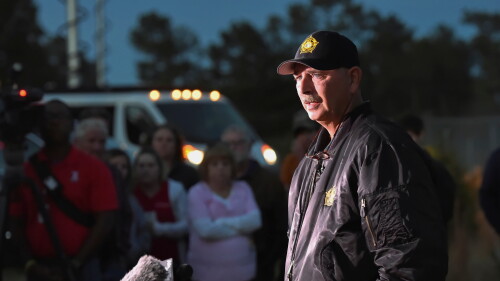
The Oakland County deputy used a trash can beneath the window to reach the children; He was then able to help the boys through the window and lower them to the ground
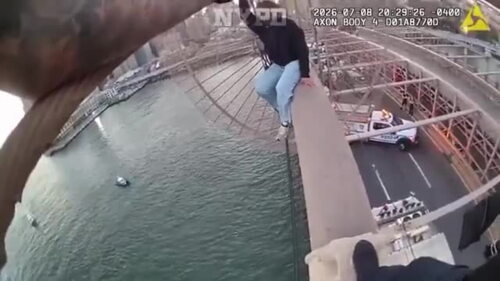
The recognition highlights the wipe’s innovative approach to presumptive fentanyl surface detection and its potential value for professionals working in high-risk safety environments