

By Joshua Coleman
In elementary school, I learned about explorers like Columbus and scientists like Galileo, people who challenged long-held beliefs in the face of resistance. I used to wonder what it would feel like to witness a real paradigm shift.
After training with Rener Gracie at Gracie University, I believe I am witnessing one now; a shift that will force law enforcement to reassess much of what we have accepted as status quo in control tactics. And like every shift, it is meeting resistance.
The catalyst: The SAFEWRAP controversy
Last year, Rener Gracie, co-founder of Gracie University and a major figure in modern Jiu-Jitsu, introduced the SafeWrap system. He claimed it was virtually inescapable, safer than prone restraint and required a licensing agreement for institutional use.
Many officers heard about SafeWrap long before they understood what it actually was. Early promotional materials framed prone restraint as inherently dangerous and implied that SafeWrap was the necessary alternative. That framing hit a nerve in a profession where prone control has been a foundational tactic for decades. Agencies weren’t just reacting to a new technique, they were reacting to the suggestion that long-standing, court-supported practices were suddenly considered wrong. That dynamic fueled the debate far more than the mechanics of the system itself.
His message ignited debate across law enforcement and Jiu-Jitsu communities. The California Force Instructors’ Association (CALFIA) became involved after initial marketing implied prone restraint was dangerous and left our members wondering whether the system criminalized existing tactics. CALFIA leadership met with Gracie and the SafeWrap team, resulting in adjusted language. Still, one statement stayed with me: “Supine control is mechanically superior to prone control.” Intriguing, but I wasn’t convinced. My policing DNA told me that putting a suspect prone and facing away from me was safer.
[embedded content]
The CALFIA conference
Engaging differing viewpoints is one of CALFIA’s strengths, and in that spirit, we invited Gracie to join a prone-restraint discussion panel at our annual conference.
I asked the panel two simple questions: Why do we prone suspects out? Is it mechanical, or is it tradition? The discussion that followed was telling. Retired Captain Joseph Iacono noted that the carotid hold once served as an equalizer when suspects fought from the prone position. With that option removed in California and discouraged elsewhere, the rationale for defaulting to prone became less clear.

Author Joshua Coleman asked the panel at the CALFIA conference two simple questions: Why do we prone suspects out? Is it mechanical, or is it tradition?
The following day, I sat on the mat with Rener Gracie, Jay Wadsworth of Effective Fitness Combatives and CALFIA Treasurer Ken Van Dyke. Watching Jay and Rener debate the mechanics of control was like watching technicians troubleshoot a machine. That conversation nudged me toward an uncomfortable thought: supine control might truly be mechanically superior.
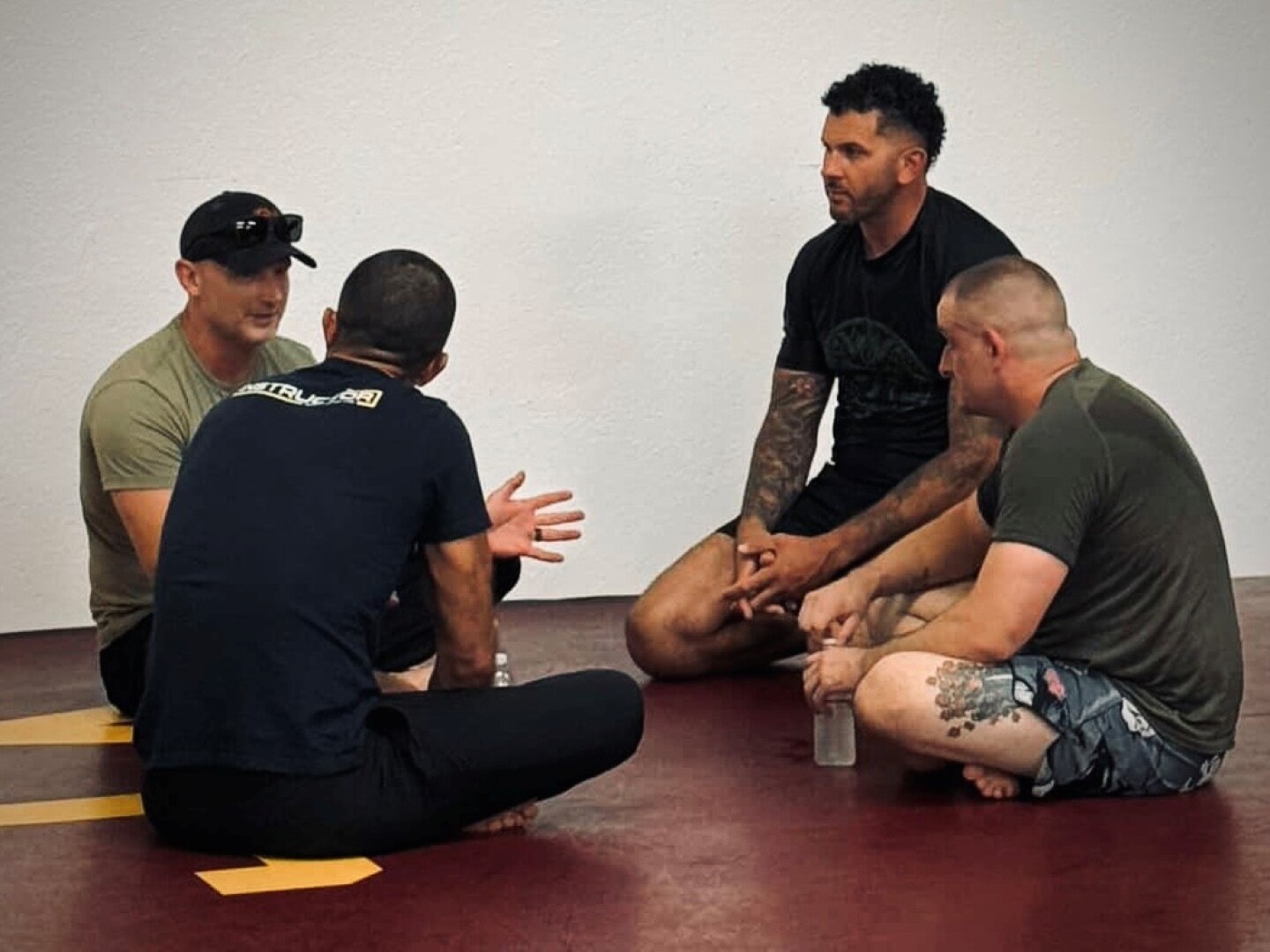
Rener Gracie, Jay Wadsworth of Effective Fitness Combatives and CALFIA Treasurer Ken Van Dyke debate the mechanics of control.
The Gracie University Lab
Months later, some of the CALFIA leadership visited Gracie University to observe the full SafeWrap Instructor Course. The training challenged everything I thought I knew about arrest and control. It didn’t just refine my understanding; it forced me to confront how much of our current system rests on tradition rather than effectiveness.
At its core, SafeWrap is not just a technique. It is a coordinated, two-officer control strategy. The system organizes upper-body and lower-body responsibilities between two officers, uses specific grip structures to keep a subject supine and delays handcuffing until resistance subsides. Nothing about it is magic or mysterious; its strength lies in the predictability of the positions, the mechanical leverage they create and the reduction in chaos that comes from two officers working in synchronized roles.
What I saw pointed to a potential shift in control tactics rooted in leverage, strategy and coordinated teamwork.
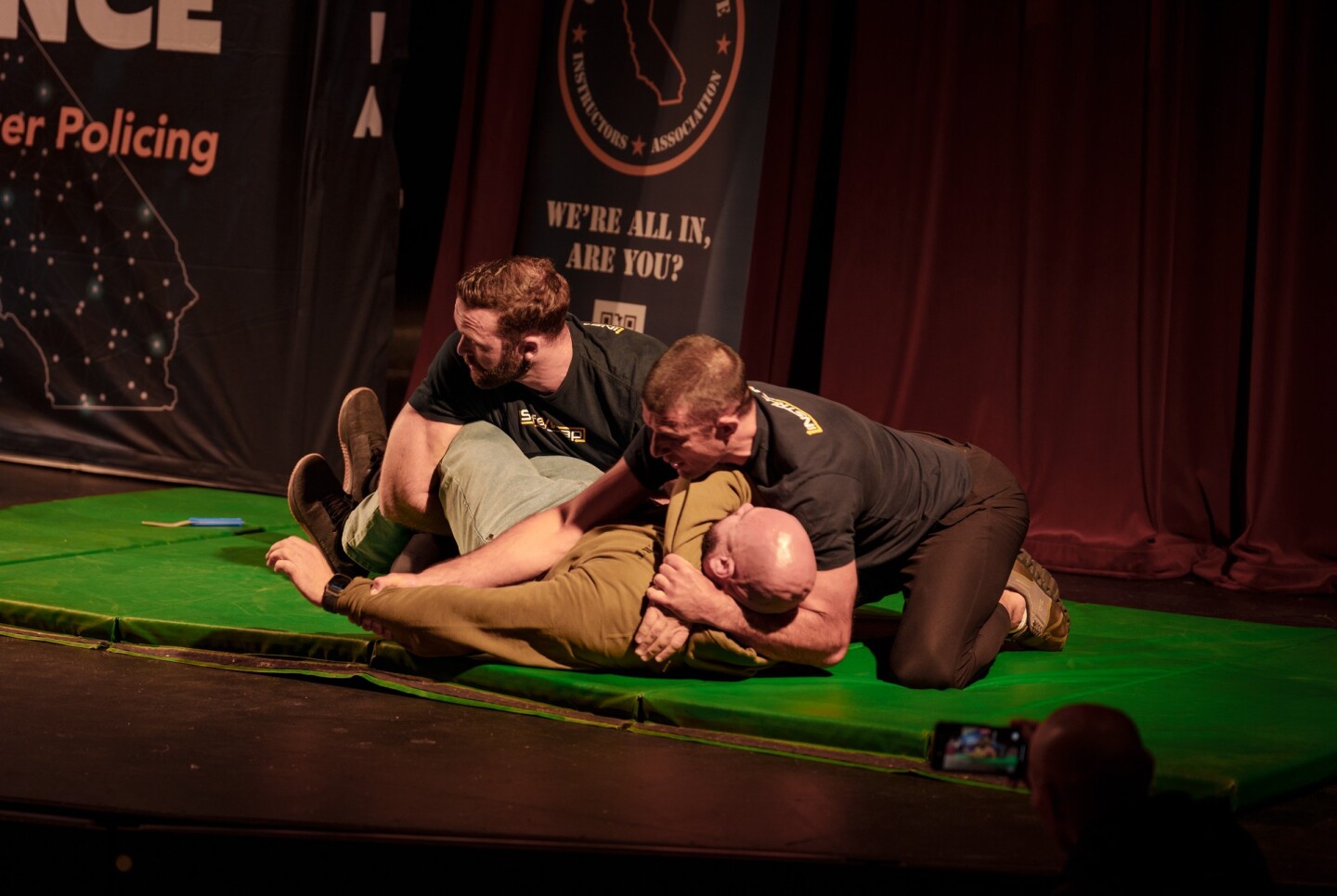
Rener Gracie and Bernardo Figueiredo demonstrate SafeWrap on a CALFIA member at the 2025 CALFIA Conference.
The old paradigm: Solo engagement and prone
Prior to the police reform effort, policing rewarded officers willing to “go hands-on.” I was trained that way, and as a field training officer, I valued it in others. Think back to your academy’s sustained-resistance drill: the oversized, overtrained “suspect,” the fixed gaze, the clenched fists, and the expectation that you would handle it alone.
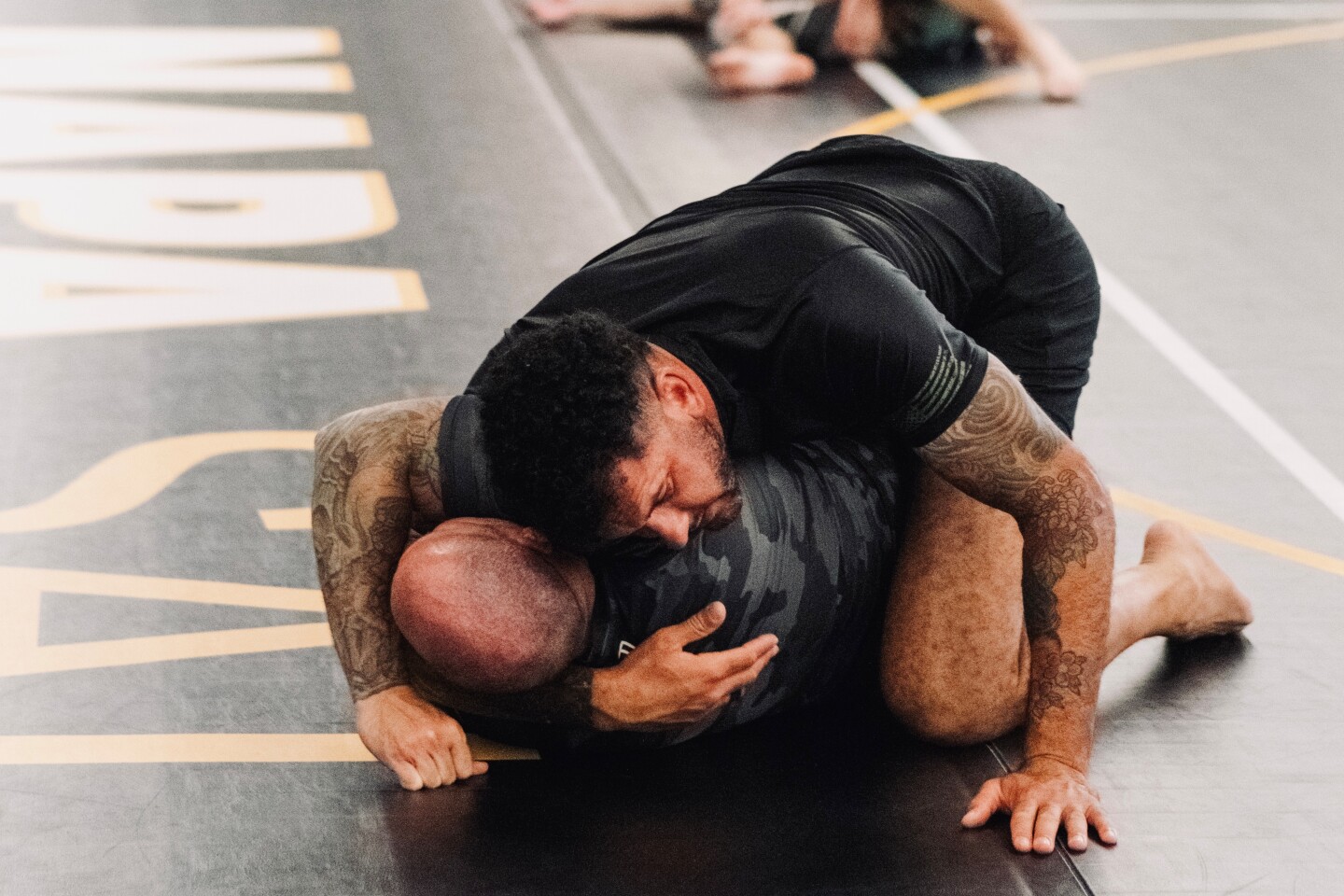
CALFIA Vice President Joshua Coleman and another CALFIA member participating in positional sparring.
No one warned us about the dangers of solo engagement. Instead, they praised heart and will to fight. I once believed a trainee’s worth hinged on whether they would jump in alone. Looking back, that mindset was flawed. Most officers are not capable of prevailing alone. How could they be? We dedicate minimal training time to control tactics and disproportionately emphasize firearms.
Gracie calls the idea that officers can reliably win solo engagements “the biggest lie in law enforcement.” I don’t know if it’s the biggest, but it does fuel ego-driven choices and unnecessary risk. Control should be coordinated, not combative.
The question that changed everything
To understand SafeWrap’s significance, we must revisit two assumptions: Why do we prone suspects out? Why do we engage alone?
For decades, police defensive tactics were built around tools — batons, flashlights, TASERs, strikes and the carotid hold — supported by a political climate that tolerated their use. Over time, incidents and case law reshaped that environment. Rodney King challenged baton use. Policies restricted flashlight strikes. TASER case law changed deployment. Ferguson caused hesitation. Eric Garner and George Floyd cast doubt on neck and diaphragm pressure.
Each shift narrowed options but also accelerated evolution. Necessity forces efficiency.
Grappling arts have answered these questions for centuries. Judo and wrestling do not reward placing an opponent face down; prone opponents are more mobile and more likely to escape. In Jiu-Jitsu, an opponent turning prone is advantageous only because it exposes the choke — a technique largely removed from policing. Without it, escape becomes easier. Yet law enforcement has spent decades forcing suspects into the most escape-friendly position and wondering why fights escalate.
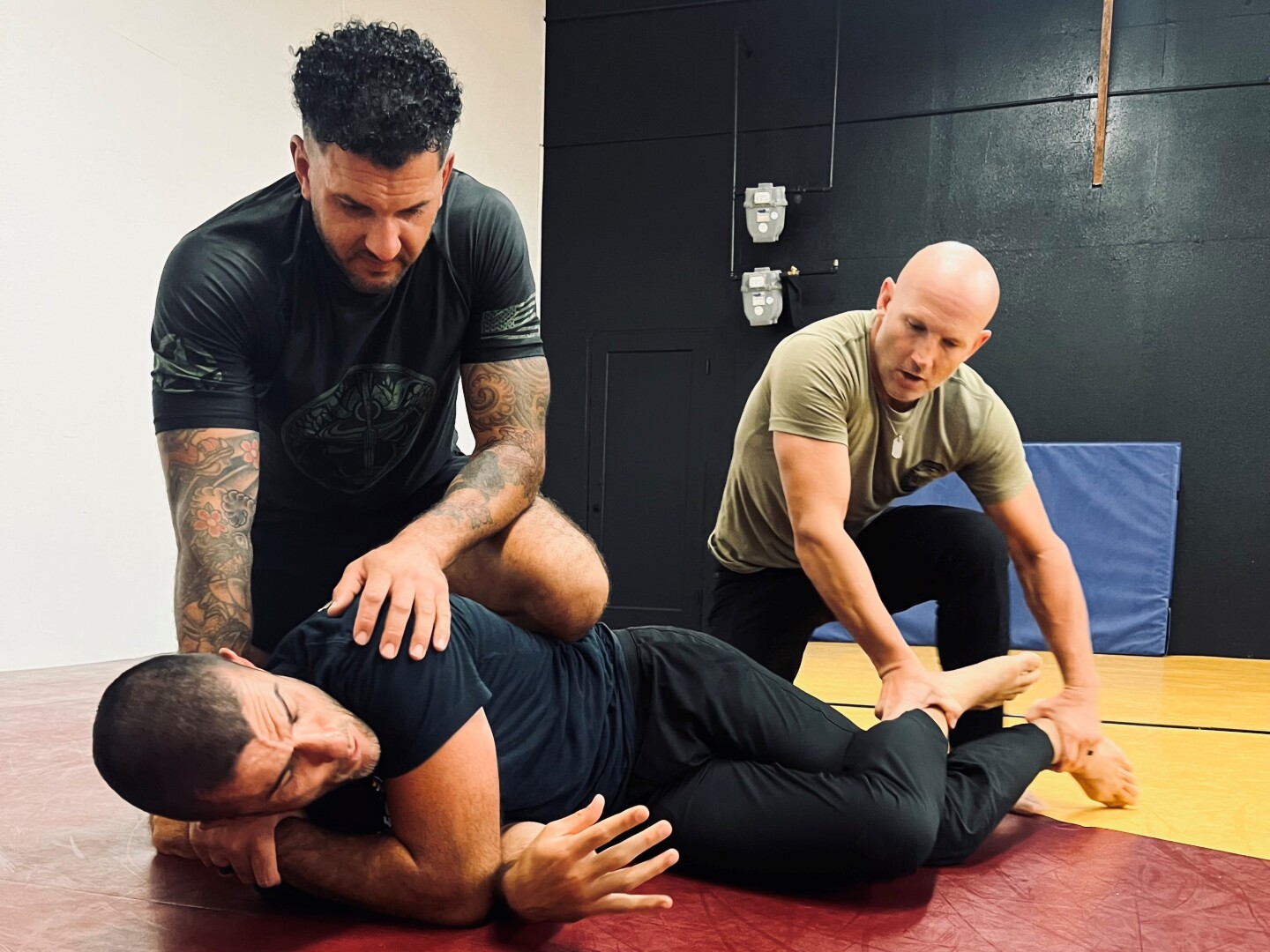
Rener Gracie explains SafeWrap to Jay Wadsworth and Joshua Coleman during the CALFIA open match session.
Blind spot and breakthrough
Critics of Gracie Survival Tactics often argue that Rener Gracie isn’t a cop, therefore he “doesn’t understand the job.” Fair, but if we rejected every innovation created by non-officers — restraints, less-lethal tools, weapons — we wouldn’t have progressed.
Gracie’s breakthrough came when a major California healthcare system asked him to design a restraint method for psychiatric patients that used no joint locks, no pain compliance and no diaphragm pressure. At first, he dismissed the idea as impossible. But the challenge stuck with him. By reverse-engineering a system under extreme limitations, SafeWrap was born — a method built on teamwork first, control before custody.
Any discussion of modern control tactics has to account for the legal environment officers now operate in. In California, that environment is defined largely by Penal Code 835a.
PC 835a states that officers shall use available resources and techniques when reasonably safe and feasible, and evaluate decisions in light of the gravity of force. What struck me most is how closely the SafeWrap approach mirrors the expectations built into 835a. The law demands that officers use reasonably available alternatives, incorporate time when feasible and balance the gravity of force decisions against the risks presented. A technique built around visibility, patience and coordination fits naturally within those requirements. That alignment doesn’t make SafeWrap the answer, but it does explain why the concept has gained traction among administrators looking for tactics that reflect modern legal obligations.
The new paradigm: Supine control and team tactics
Supine control feels counterintuitive to many officers because our training programs all revolve around turning subjects onto their stomachs for handcuffing. SafeWrap challenges that assumption by showing that keeping a person on their back removes key escape pathways and reduces the frantic scramble that often drives officers toward higher levels of force.
With SafeWrap, two officers divide the body: one controls the upper torso, one controls the legs. The goal is to keep the suspect supine.
When a suspect is on their back, officers can clearly see hands, face and airway. Leverage is easier to maintain without strikes. The suspect cannot post or stand. Two officers can communicate and coordinate while viewing the same fight.
The biggest shift is patience. Officers do not rush to handcuff. They maintain control until resistance stops, then cuff. This is same “position before submission” principle Jiu-Jitsu has always taught. The system is inherently de-escalatory; if distance buys time, SafeWrap buys time when distance is gone. Even handcuffing is modified through a lateral technique that avoids rolling the suspect prone.
Exceptions
It’s important to be clear about what SafeWrap is not. It does not eliminate the need for prone restraint, it does not solve single-officer encounters and it does not remove the unpredictability of people under the influence of drugs, alcohol or mental illness. It is a tool. It is not a replacement for judgment, not a universal answer and not immune to failure; although escaping once you’re in it is nearly impossible.
No tactic covers every scenario. Solo officers may still need temporary prone positioning during unavoidable one-on-one fights. Drug use, alcohol and mental illness can affect resistance unpredictably in any position. Prone restraint still remains the default technique for single-officer grounded handcuffing. That is, until someone discovers something better.
The licensing paradox
SafeWrap’s licensing requirement caused early controversy. Many viewed it as unnecessary bureaucracy. But over time, it became clear the requirement ensures consistent, minimum training standards. It prevents dilution and maintains competency across agencies.
The licensing requirement isn’t about ownership of a tactic; it is about standardization. SafeWrap relies on timing, grip structure and communication, and those skills degrade quickly if they aren’t taught consistently. The licensing model forces agencies to meet a minimum instructional bar, which may be its most controversial and most misunderstood element. Whether one agrees with the approach or not, it reflects an attempt to prevent the drift that often occurs when new tactics spread informally across agencies.
I initially doubted whether police administrators would accept licensing and recurring training. But after demonstrating the system to my own administration, they approved an eight-hour certification, quarterly videos and a four-hour recertification. Gracie’s push to increase control-skills training might actually succeed.
Personal experience
I have served in law enforcement in the San Francisco Bay Area for 18 years and trained in grappling for nearly as long. I have spent more than a decade involved in use-of-force instruction and I am very well experienced in arrests utilizing ground control skills.
While writing this article, I became involved in a violent struggle with a suspect who assaulted my partner and I. During the fight, I tried SafeWrap for the first time. After we crashed over a desk, I secured a seat-belt grip but quickly felt the suspect building back to his feet. Breaking him down again, I switched strategies: keep him on his back. I established the primary and secondary grips. My partner, who did not know SafeWrap, controlled the legs.
For just over five minutes, the suspect fought with everything he had. He broke my secondary grip and grabbed my partner’s gun. From the side pin, I immediately recognized and stopped the gun grab. Eventually he exhausted himself, and when cover arrived, we rolled him for handcuffing. See the bodycam below.
Looking back on my own encounters, I realized that whenever I have been in a violent fight where I did not feel comfortable handcuffing alone, I kept the suspect flat on their back until cover arrived. The strategy works.
The lie and the lesson
I titled this article “The Rener Gracie ‘lie.’” But the lie isn’t that SafeWrap doesn’t work. The lie is that it works even better than he claimed.
SafeWrap forced me to reexamine beliefs I had carried my entire career. Gracie argues that resisting suspects should be held supine until they comply or fatigue, then transitioned to lateral handcuffing. He may not fully appreciate the legal significance of that approach, but he is right. As the Ninth Circuit stated in Deorle v. Rutherford, there is no “game clock” on the Constitution.
My experience at the SafeWrap Instructor Certification Course pushed me to think deeply about controlling violent suspects safely and effectively. At this moment, SafeWrap is the only comprehensive system built around coordinated supine control and lateral handcuffing. Others may follow, and as with any major shift, resistance will give way to refinement and innovation.
The opinions and conclusions in this article are my own and do not reflect the opinion of the California Force Instructors’ Association.
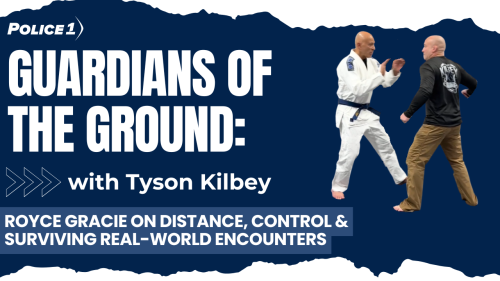
With lessons for every skill level, Royce Gracie reinforces why proper instruction, consistent training and tactical awareness matter now more than ever
About the author

Joshua Coleman
Joshua Coleman is the Vice President of CALFIA and an active sheriff’s deputy in the San Francisco Bay Area with over 20 years of decorated service in several assignments. He is a recognized expert in use-of-force training with over a decade of instruction experience and an innumerable amount of force encounters to include multiple officer-involved shootings. As a Brazilian Jiu-Jitsu 3-stripe purple belt with 15 years of grappling and mma experience, he integrates proven combatives focused on control, efficiency and officer safety. His real-world insight and commitment to improving training standards make him a respected voice in modern policing.