

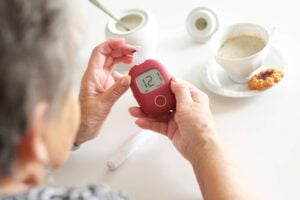
 Have you ever wondered how diabetes (or prediabetes) affects older adults?
Or whether your blood sugar numbers are cause for worry?
These are reasonable concerns, given that diabetes is pretty common in later life.
So in this post, I’d like to help you better understand diabetes in later life. Specifically, I’ll cover:
-
The basics about blood sugar, insulin, and diabetes
-
Signs and symptoms of diabetes in older adults
-
The risks of high and low blood sugar in older adults
-
How diabetes is diagnosed
-
Treating older adults for diabetes
-
Treating prediabetes
-
What to do if you’re concerned about diabetes in an older person
[embedded content]
Glucose is the main source of energy for the cells in the body. We get glucose mostly from carbohydrates, although the body can also make glucose from protein and fat.
Cells need a constant supply of glucose, so the body is designed to keep blood glucose within a certain range.
A normal fasting blood glucose is in the range of 70-99mg/dL. Eating does cause a rise in blood glucose, but normally not above 140mg/dL or so.
Insulin is the hormone that helps glucose move from the bloodstream into the body’s cells, where it can be used for energy. If the body does not make enough insulin, or if insulin is not working well, blood sugar rises. This is called hyperglycemia, and if blood glucose is regularly too high, that is probably diabetes.
Measuring blood glucose and the hemoglobin A1C test
Blood glucose levels in the body are dynamic, and change throughout the day, based on eating, activity levels, medications, stress, and more. They can be measured in the moment with a fingerstick test, or with a blood draw.
To check on blood sugar control, health providers often combine a blood glucose test with a related test called the hemoglobin A1C (or glycated hemoglobin) test. This test reports the percentage of red blood cell hemoglobin that is coated with glucose (or glycated).
Since red blood cells live about three months, the A1C test reflects a person’s average glucose levels over the previous 2-3 months.
Since a normal person always has glucose in the bloodstream (you’d die if you didn’t), it’s normal for at least a few percent of your hemoglobin cells to be glycated.
If you have higher glucose levels than normal, a higher percentage of your hemoglobin will be glycated.
A normal A1C for older adults is less than 5.7% (same as for younger adults), with lower values (e.g. around 5%) indicating even better glucose control.
Doctors use fasting blood glucose and hemoglobin A1C to define normal blood sugar, prediabetes, and diabetes.
Diabetes is generally defined as:
- Fasting glucose of 126 mg/dL or higher
- Hemoglobin A1C of 6.5% or higher
- Random plasma glucose of 200 mg/dL or higher if symptoms are present
Prediabetes is generally defined as:
- Hemoglobin A1C of 5.7% to 6.4%
- Fasting glucose of 100 to 125 mg/dL
Normal is generally:
- Hemoglobin A1C below 5.7%
- Fasting glucose below 100 mg/dL
What Is Type 1 vs Type 2 Diabetes?
There are two main types of diabetes.
Type 1 diabetes happens when the body stops making insulin because insulin-producing cells in the pancreas are destroyed by an autoimmune process. It often begins in childhood or early adulthood, although a slower-onset form can appear later in adulthood. People with Type 1 diabetes must be given insulin.
Whereas Type 2 diabetes is caused by the body’s cells becoming resistant to insulin. This initially causes higher than normal insulin levels (although insulin production may also become impaired over time), with the body having to work harder to get glucose into the cells. Type 2 diabetes is often associated with excess weight, metabolic dysfunction, and abnormal cholesterol patterns.
Type 2 diabetes is the most common form of diabetes that affects older adults.
Symptoms and problems associated with diabetes happen on two time scales: short-term and long-term.
In the short-term, high blood sugar causes no symptoms at first.
When symptoms do happen, they are often due to blood sugar getting high enough that the kidneys begin to spill glucose into the urine. This tends to happen when blood sugar rises above 180 mg/dL.
Common symptoms of high blood sugar include:
- Urinating more often
- Increased thirst
- Dehydration
- Blurry vision
- Weight loss
If blood sugar becomes very high, a person may develop more serious symptoms, such as:
- Nausea and/or vomiting
- Lethargy
- Confusion
- Fast heart rate
In severe cases, very high blood sugar can progress to coma.
Long-Term Complications of Diabetes
Over the years, even moderately elevated blood sugar can damage blood vessels and nerves.
Long-term complications of diabetes often include:
- Eye damage, including diabetic retinopathy
- Kidney disease
- Nerve damage, including peripheral neuropathy
- Autonomic nerve problems
- Foot wounds and poor healing
- Cardiovascular disease
- Cerebral small vessel disease
- Vascular cognitive impairment
In general, the higher the blood sugar is, and the longer it stays elevated, the greater the risk of these complications.
That said, most of these long-term complications take 10-20 years of high blood glucose to develop. It is also possible to reduce the risk of certain types of complications by using protective medications (e.g. certain types of blood pressure medication can protect the kidneys from diabetes changes).
Diabetes and Hypoglycemia (low blood sugar)
You may have heard that low blood sugar is also an issue in diabetes.
This is because when diabetes is treated with certain medications to bring down blood sugar, it’s not uncommon for blood sugar to then become too low (e.g. below 60 mg/dL).
This is called hypoglycemia. Symptoms of hypoglycemia include:
- Feeling shaky
- Feeling weak
- Confusion
- Falls
Severe hypoglycemia can cause loss of consciousness, seizures, coma, or even death.
Hypoglycemia can be dangerous for people of all ages, but it’s especially problematic for older adults, as it can accelerate cognitive decline or provoke falls.
For this reason, if an older adult is taking medication for diabetes, geriatricians are often proactive about monitoring for hypoglycemia.
Most diabetes is diagnosed when routine blood work shows an elevated glucose or A1C level. An abnormal result usually should be confirmed with repeat testing, unless the clinical picture is very clear.
Screening for diabetes is often recommended for adults ages 35 to 70, especially if they are overweight or obese.
If a new diagnosis of Type 2 diabetes is made, the next steps often include:
- Checking for kidney disease
- Checking for eye disease
- Asking about nerve symptoms
- Reviewing cardiovascular risk
- Reviewing diet and exercise habits
- Considering referral for diabetes education
- Creating an initial plan for glucose management and monitoring
- Discussing what A1C goal is appropriate for that specific person
It is also important to remember that some illnesses and medications can temporarily raise blood sugar, so the broader medical context should always be considered.
Most of the time, when older adults are diagnosed with diabetes, we initially try to treat them with lifestyle measures. This can be enough to control (or sometimes even reverse) diabetes in some older adults.
The initial treatment of Type 2 diabetes should almost always include:
- Increasing exercise and activity
- Weight loss, if appropriate
- Dietary counseling
- Reducing added sugars
- Minimizing ultra-processed foods
- Considering a lower-carb Mediterranean-style eating pattern, when suitable
Metformin to treat diabetes in older adults
If lifestyle changes are not enough to reach the goal A1C, metformin is often the first medication used. That is because metformin helps the body respond better to insulin.
Metformin also carries very little risk of hypoglycemia, because it doesn’t directly drive down blood glucose, but rather helps cells take in the glucose available in the bloodstream.
Metformin is inexpensive and has a long track record of being pretty safe and effective, so in geriatrics, we are often in favor of using this medication.
However, if metformin is not sufficient to help an older person reach their target A1C goal (more on that below), then additional medications might be needed.
We cover which diabetes medications are best for older adults in this video:
[embedded content]
Target A1C Goals for Older Adults
You might think that with diabetes, the goal is always to get a person’s blood sugar down to a normal level.
But especially when it comes to older adults, aiming for tight control can actually be dangerous, because it usually exposes the person to frequent episodes of low blood sugar, which can cause falls or accelerate cognitive decline.
For these reasons, expert guidelines recommend that a person’s A1C goal be based on their state of health and also life expectancy:
- Healthy older adults: A1C less than 7.5%
- Intermediate health or life expectancy under 10 years: A1C less than 8%
- Poor health, significant frailty, or frequent hospitalization: A1C less than 8.5%
Also important: if an older adult is taking diabetes medication other than metformin and has an A1C below 7%, it is often worth asking whether the treatment plan is too aggressive. Over-treatment is common, and it can increase the risk of hypoglycemia.
Geriatricians tend to be especially cautious about aggressively treating diabetes. The immediate harms of overtreatment, especially hypoglycemia, usually matter more for an older adult who is frail or has limited life expectancy. After all, it often takes 10 to 20 years for moderately high blood sugar to cause major complications, whereas hypoglycemia can cause falls, emergency visits, and other short-term harms right away.
Type 2 diabetes doesn’t usually occur all of a sudden; it’s usually preceded by years of prediabetes. During this phase, blood sugar levels are higher than normal, but not yet high enough to qualify as diabetes.
The good news about prediabetes is that lifestyle changes can usually stabilize blood glucose levels, and in some cases can even put an older adult back in the normal range.
The most effective changes to make are:
- More exercise and physical activity
- Weight loss, if appropriate
- Fewer added sugars
- Fewer ultra-processed foods
- Better food quality (e.g. more vegetables, fruits, lean protein, whole foods)
- A nutritious diet that supports metabolic health
Although these changes usually do improve blood glucose levels, they are not always worth pursuing.
In particular, when it comes to older adults who are frail and likely in their last years, improving glucose needs to be balanced against other important needs, such as enjoying favorite foods and other quality of life issues.
Medications are sometimes considered for prediabetes, especially if there is obesity or rising risk, but in most cases, lifestyle changes and monitoring should suffice.
If you are concerned about diabetes or prediabetes, here are some good questions to ask your doctor:
- Should I have my hemoglobin A1C checked?
- How do my current numbers compare with my past results?
- Am I in the normal, prediabetes, or diabetes range?
- If I have diabetes, what A1C goal is right for me?
- Does my treatment plan fit my overall health and level of frailty?
- Am I at risk for low blood sugar?
- Could any of my medications be causing hypoglycemia?
- Do I need screening for kidney disease, eye disease, or nerve damage?
- What kind of eating pattern and exercise plan would be safest and most helpful for me?
- Do I need diabetes education or help monitoring my blood sugar?
And one more especially important question for older adults:
- Am I being overtreated?
That last question especially matters if an older adult has a low A1C, is taking insulin or other glucose-lowering drugs, has had falls, or has had episodes of weakness, confusion, or suspected hypoglycemia.
Have you had any concerns about your blood sugar levels? Let us know in the comments below.
