

By Sasha Larkin
In 2026, special event planning can no longer be treated as a discrete operational task. It must be embedded as a continuous, intelligence-led discipline that integrates prevention, preparedness and public trust. From large-scale sporting events and concerts to political gatherings and community celebrations, the threat environment facing police leaders is more complex, faster moving and less predictable than ever before.
The foundation of effective special event operations is early and integrated intelligence planning. Police leaders should establish a shared threat picture months — not weeks — in advance. This requires fusing open-source intelligence, partner reporting, private-sector threat intelligence, venue security inputs and community-based information into a single analytic framework. Intelligence must drive operational decisions, including staffing models, protective intelligence deployments, access control, traffic management and contingency planning. Information that does not inform action has little operational value.
| RELATED: Why unified command succeeds or fails before the first unit arrives
Equally critical is unity of command and clarity of roles. Special events often span multiple jurisdictions and disciplines, bringing together law enforcement, fire and EMS, emergency management, transportation agencies, public health officials, venue operators and private security partners. Leaders must formalize command structures, authorities and escalation pathways well in advance. Establishing a common operating picture and pre-defined information-sharing protocols reduces friction and prevents breakdowns at organizational seams during rapidly evolving incidents.
As the #FIFAWorldCup approaches, we continue to prepare.
This morning, our Motorcycle Unit practiced its wedge movements for upcoming escorts. These officers train often, though some movements are now FIFA-specific.
For the World Cup, our Motorcycle Unit has led…
1/2 pic.twitter.com/nbPU1PkT0Z
— kcpolice (@kcpolice) February 5, 2026
Police leaders must also account for converging and emerging threat vectors. These include targeted acts of violence, vehicle-ramming attacks, unmanned aircraft systems (UAS), cyber disruptions, misinformation campaigns and insider threats. Planning should incorporate drone detection and response procedures, credentialing and access control measures, cyber contingencies affecting communications or entry systems, and strategies to identify and counter false or misleading information that can escalate fear and confusion in real time.
The foundation of special event operations is early and integrated intelligence planning.
Preparation must extend beyond written plans. Rehearsals are essential. Tabletop exercises provide alignment, but functional drills — multi-agency walk-throughs, communications testing, medical surge planning, evacuation and reunification exercises — reveal gaps that only realism can expose. Leaders should deliberately train for decision-making under compressed timelines and stress, because real-world incidents rarely unfold as planned.
| RELATED: Dallas’ World Cup security plan covers venues, cyber threats and dignitaries
Finally, public trust is an operational asset. Transparent communication, visible coordination with partners, and a deliberate focus on officer wellness all contribute to safer outcomes. When special events are executed with precision, professionalism and empathy, law enforcement not only protects the public — it strengthens legitimacy and community resilience long after the event ends.
About the author
Sasha Larkin is the Director of Intelligence and C4 Operations for the 2026 FIFA World Cup. Sasha retired as an Assistant Sheriff with the Las Vegas Metropolitan Police Department, where she served for over 25 years. Sasha oversaw two Divisions: Homeland Security and Investigative Services. She was also the Intelligence Commander for Major County Sheriff’s Association and represented the LVMPD in national conferences on issues related to crime and terrorism prevention.
What law enforcement can do right now to address malicious drone activity, even as legislation struggles to keep pace
From a hoax school shooting to Boston Marathon planning, real-world incidents show how relationships and pre-event coordination determine outcomes
Six converging forces will shape how agencies operate, communicate and earn trust in an increasingly volatile public safety environment
With 300,000 fans expected to attend, officials emphasize coordinated crowd safety operations on the Las Vegas Strip

Large-scale security planning requires redundancy, repetition and a culture of readiness
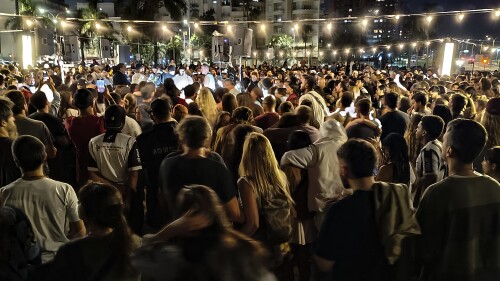
A new, unified approach to public event safety is moving jurisdictions from reactive to proactive protection — driven by partnerships, data and purpose